
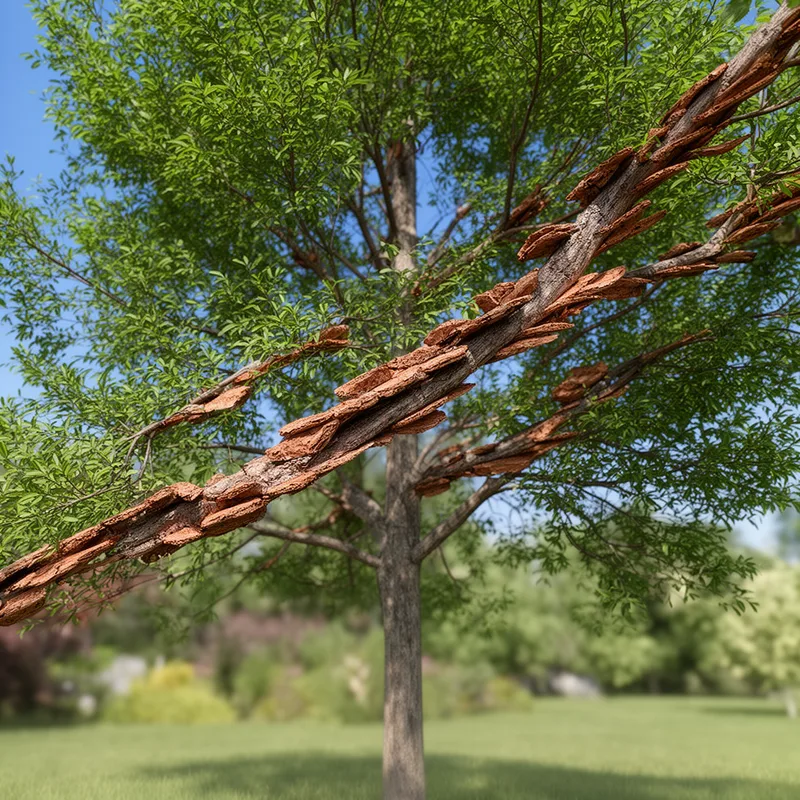
Ulmus alata
- noun
- Specialized
 :
Ulmus alata
:
Ulmus alata
- The small leaves and corky wings on the branches make Ulmus alata easy to identify.
Examples
-
Gardeners often plant Ulmus alata for its ornamental value in landscapes.
-
The Ulmus alata tree grows well in moist soils.
-
Diseases that affect other elms can also pose a threat to Ulmus alata populations.
-
I saw an Ulmus alata in the park yesterday.
-
The unique corky wings on the branches make identifying Ulmus alata easy for botanists.
-
Many landscapers prefer to use Ulmus alata due to its striking appearance and adaptability.
-
In the fall, the leaves of Ulmus alata turn a beautiful shade of yellow.
Synonyms
A North American tree with rough, thick bumps on its branches that look like wings

A North American tree with thick ridges on its small branches and new growth
Surface Forms
Morphology
Ulmus + alata
This is a Latin taxonomic binomial (scientific name) rather than a regular English phrase; its meaning requires botanical knowledge and the specific sense of the epithet 'alata' is not provided. Even a learner who knows that Ulmus refers to elms would not reliably derive the species-level descriptive meaning ('winged' twigs/branches) from the constituents, so it is not transparently interpretable by a B1 learner.
Etymology
Ulmus alata is a Latin name that means the 'winged elm'. Its young branches have flat, bumpy wings, so picturing twigs with little 'wings' helps you remember this North American elm.

