
Ulan Bator
 1
5.2

- proper noun
- /ˈuːlən ˈbɑːtər/
- Ulan Bator often experiences extreme temperatures during the winter months.
Examples
-
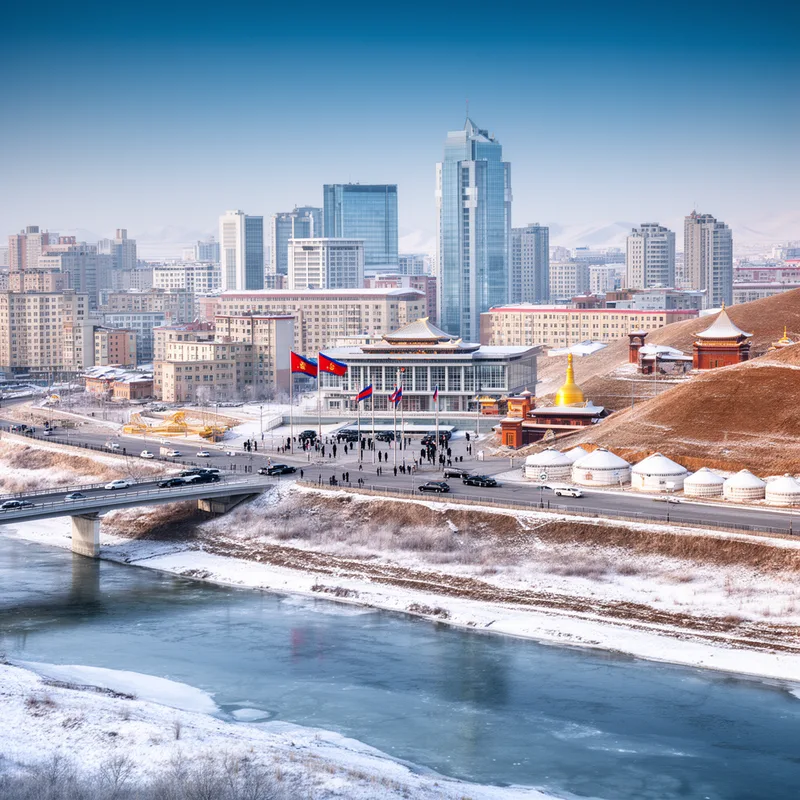
The capital and largest city of Mongolia is Ulan Bator, situated on the Tuul River.
-
Many tourists visit Ulan Bator to experience Mongolian culture and history.
-
In 1924, the socialist MPR (Mongolian People's Republic) was officially established, and the capital city of Urga was renamed Ulan Bator (Red Hero).
Academic text (2001) -
And the isolated position of Taipei in the international state system since it left the UN in 1971 resembles that of Ulan Bator from 1921, the time of the MPR's earliest beginnings, to 1961, when it was admitted to the UN.
Academic text (2001)
Synonyms

 1
8.5
A city that is the capital and largest of Mongolia in the north-central part of the country
 1
9.9
An old name for Ulaanbaatar, the capital city of Mongolia
Surface Forms
Morphology
Ulan + Bator
This is a toponym (proper name) whose constituent parts have no transparent lexical meanings in English (both parts are not dictionary words here), so a B1 learner who 'knows' the surface forms would not be able to infer that it denotes Mongolia's capital. Place names are conventionally arbitrary and language-specific, so the meaning is not compositional or derivable from the parts.
Etymology
Ulan Bator was given as the city name in 1924 to honour a Mongolian hero. The name breaks into Ulan ('red') and Bator ('hero' or 'brave'), so it literally means 'Red Hero', which explains why the capital's name honors a person rather than a place.