
Uintatheriidae
- noun
- /juːˈɪntəˌhɛriˌaɪdi/
- Specialized
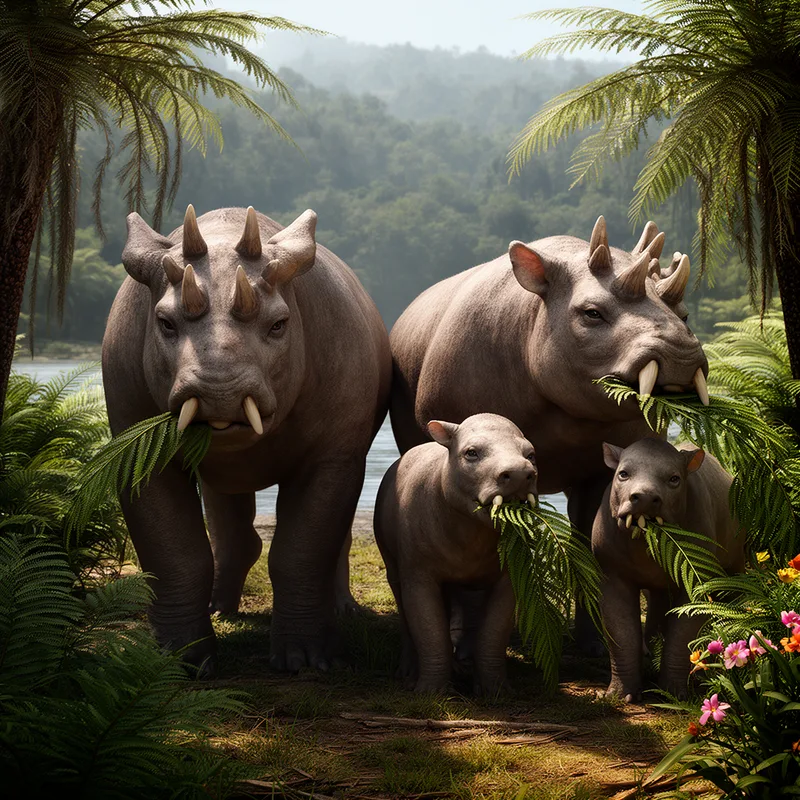
- Members of the Uintatheriidae were notable for their large size and distinct cranial projections.
Examples
-
Fossils of the Uintatheriidae have been discovered across North America and Asia.
-
The extinction of the Uintatheriidae marked the end of a unique branch of early mammalian evolution.
-
The Uintatheriidae were fascinating creatures of the Eocene epoch.
-
Did you know that the Uintatheriidae were herbivorous mammals?
-
Fossils of the Uintatheriidae have been discovered across North America and Asia.
-
Members of the Uintatheriidae were notable for their large size and distinct cranial projections.
-
The extinction of the Uintatheriidae marked the end of a unique branch of early mammalian evolution.
Surface Forms
Morphology
Uintatheriidae = Uintatherium (opaque) = Uintatherium + idae
Formed by a specialized scientific family suffix '-idae' attached to a Latinized genus name; this taxonomic formation is unlikely to be transparent to average learners.
Etymology
Uintatheriidae comes from the genus Uintatherium plus the scientific ending -idae, which means 'family'. Uintatherium joins the place name Uinta, a region in North America, with the Greek root therion, meaning 'beast', so it literally means 'Uinta beast'. So, Uintatheriidae is the 'family' of those large, beast-like, plant-eating mammals that lived long ago.

