

Tympanuchus pallidicinctus
- proper noun
- Specialized
 :
gallo de las praderas menor
:
gallo de las praderas menor
- The Tympanuchus pallidicinctus population has declined due to habitat loss in recent decades.
Examples
-
Scientists studied the mating rituals of Tympanuchus pallidicinctus in western Texas.
-
Conservationists are implementing measures to protect Tympanuchus pallidicinctus from extinction.
-
The Tympanuchus pallidicinctus is known for its distinctive mating display.
-
Have you ever seen a Tympanuchus pallidicinctus in the wild?
-
Conservationists are implementing measures to protect Tympanuchus pallidicinctus from extinction.
-
Scientists studied the mating rituals of Tympanuchus pallidicinctus in western Texas.
-
The Tympanuchus pallidicinctus population has declined due to habitat loss in recent decades.
Synonyms
 1
8.0
1
8.0

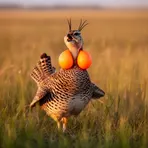
A brown spotted bird that lives in North American grasslands and makes a low booming call during mating


 1
8.2
1
8.2
A small grassland bird in western Texas and nearby areas that dances to attract mates
Surface Forms
Morphology
Tympanuchus + pallidicinctus
This is a Latin binomial species name composed of taxonomic labels rather than ordinary English words; 'Tympanuchus' is a genus name and 'pallidicinctus' is a Latin descriptor not found in the learners' dictionary. A B1 learner who “knows” the listed constituents would not be able to derive the meaning 'lesser prairie chicken' from these proper names and obscure Latin morphemes, so the expression functions as an arbitrary label rather than a compositional phrase.
Etymology
Tympanuchus pallidicinctus is the scientific name for the 'lesser prairie chicken' and comes from old language words that describe the bird. Tympanuchus refers to the drum-like booming sound males make in their mating dance, and pallidicinctus means 'pale band', a light stripe on the bird's feathers, so the name points to the bird's sound and look.