
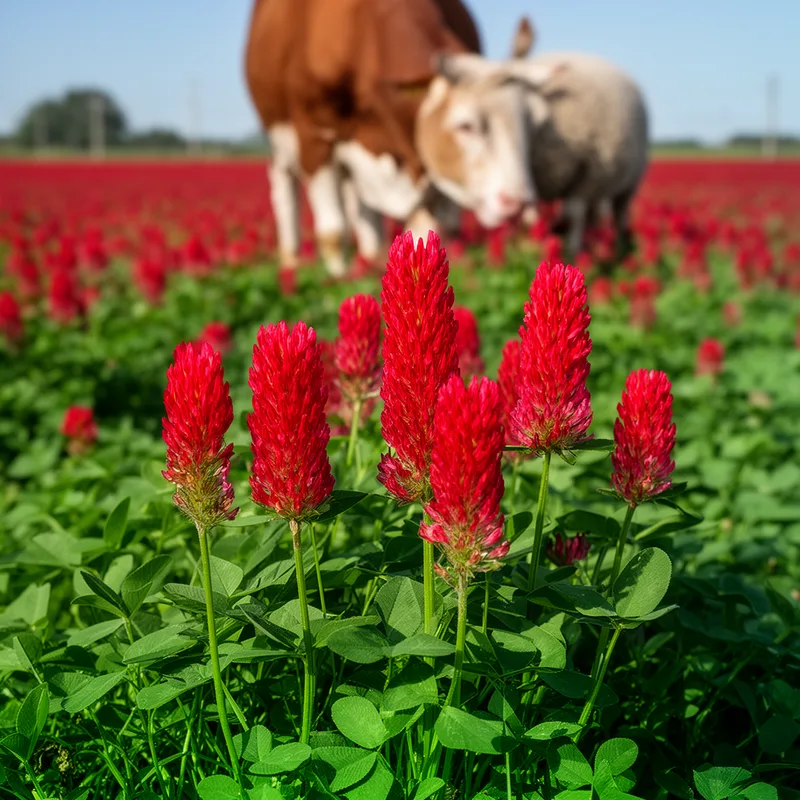
Trifolium incarnatum
- noun
- Specialized
- Farmers in the United States cultivate Trifolium incarnatum for use as nutritious livestock forage.
Examples
-
The brilliant red flowers of Trifolium incarnatum add striking color to pastures in the spring.
-
Trifolium incarnatum is often used as a cover crop to enrich soil fertility on farms.
-
The Trifolium incarnatum is known for its vibrant crimson flowers.
-
Farmers often plant Trifolium incarnatum to improve soil health.
-
Trifolium incarnatum is widely cultivated as a forage plant for livestock, providing essential nutrients.
-
The vibrant crimson flowers of Trifolium incarnatum bloom in spring, attracting pollinators to the fields.
-
Farmers benefit from planting Trifolium incarnatum because it helps enhance soil fertility naturally.
Synonyms

A plant with red, spiky flowers grown for animal food and to improve soil

A European plant with red flower heads grown to feed animals and improve soil
Surface Forms
Morphology
Trifolium + incarnatum
This is a standard botanical binomial combining the genus Trifolium (clover) with a descriptive epithet; if a learner knows both constituents, the reading is compositional — a Trifolium that is 'incarnatum' (flesh-coloured/crimson). Botanical Latin epithets are used descriptively across languages, so the species meaning ('crimson/flesh-coloured clover') is directly derivable from the parts.
Etymology
Trifolium incarnatum comes from Latin words: trifolium means 'three leaves' and incarnatum means 'flesh-coloured' or deep red. That's why the name fits this clover with three leaflets and bright red flower heads often grown as food for animals.

