
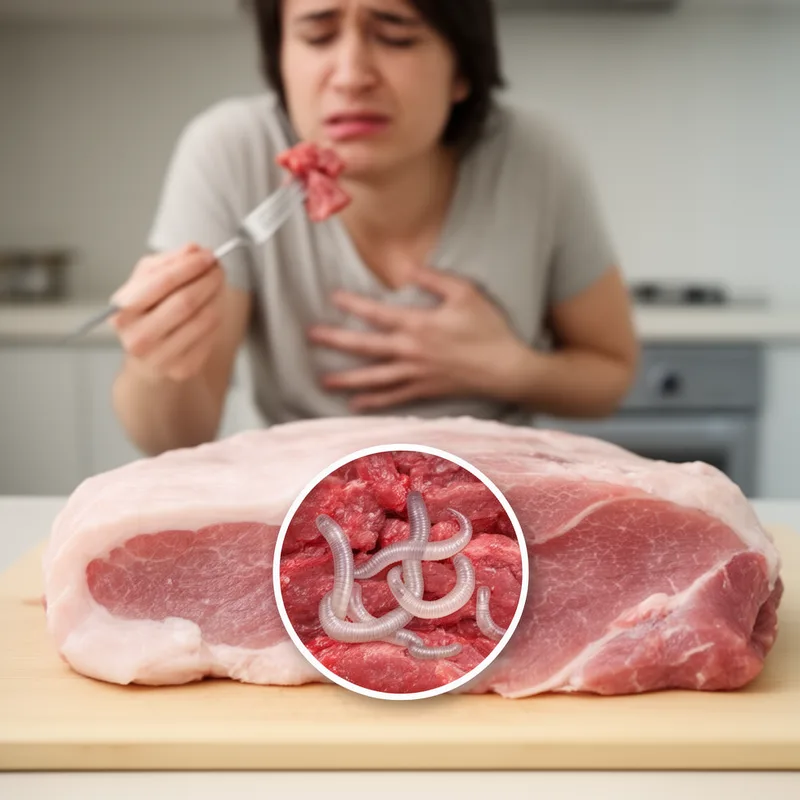
Trichinella
- proper noun
- /ˌtrɪkɪˈnɛlə/
- Specialized
- Those days of fumbling with life led to a career studying parasites and, in particular, the tiny roundworm Trichinella spiralis, which lurks in undercooked pork or game.
- Trichinella spiralis
Examples
-
During this decade, surveillance activities and reports were issued on many other pathogens that could be foodborne (e.g., Shigella, Brucella, Trichinella, and hepatitis viruses).
Academic text (2002) -
Trichinella, for example, will, without invitation, burrow into human muscle.
Fiction book (2001) -
To Despommier, Trichinella was a terrible and worthy adversary.
Academic text (2011) -
Trichinella reproduces in the intestines of those who eat it, which, in and of itself, is not really a problem.
Academic text (2011) -
They discovered that instead of one, there are at least five species in the genus Trichinella that appear virtually identical.
Academic text (1995) -
The practical benefits of precise classification can be seen in the case of Trichinella spiralis, the roundworm that causes trichinosis.
Academic text (1995) -
Well, we've got schistosoma, we've got Trichinella, tricuris and so forth.
-
The tiny roundworm Trichinella can infect humans when they consume undercooked meat from infected animals.
-
Research shows that Trichinella can cause serious health issues if not treated promptly.
-
When people eat raw or undercooked pork, they risk contracting an infection from Trichinella.
Compounds

- Specialized
A parasitic roundworm that lives in the intestines and muscles of animals and humans
Surface Forms
Etymology
The word Trichinella comes from the Greek root trich- meaning 'hair' and the small ending -ella meaning 'little', so it literally means 'little hair'. That's a helpful image for a tiny, thin worm that infects animals and can make people sick.

