
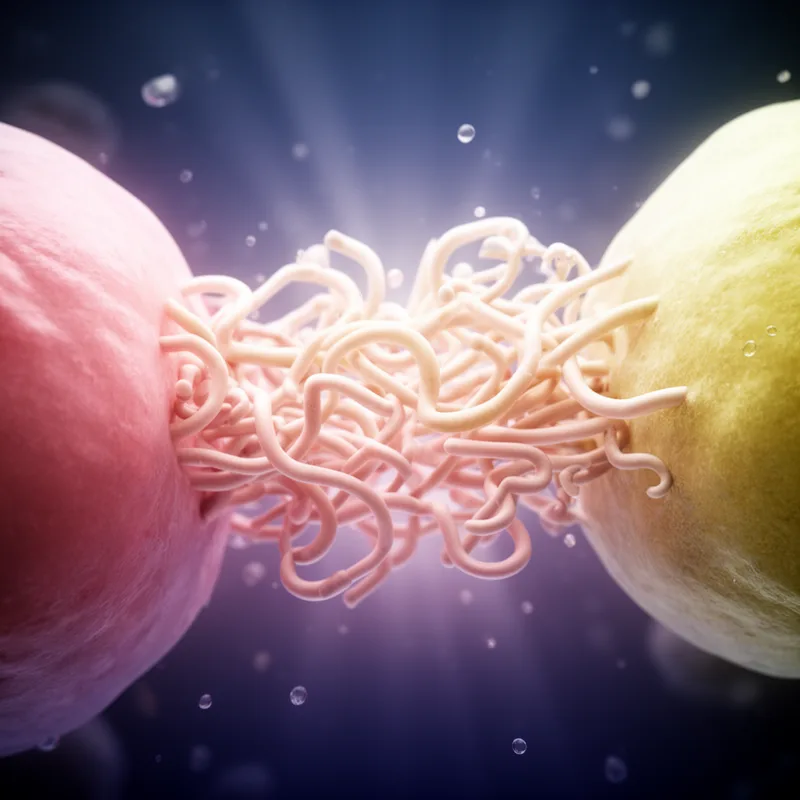
Treponemataceae
- noun
- /ˌtrɛpəˈnɛmɪˌteɪʃi/
- Specialized
- The bacterial family Treponemataceae includes organisms responsible for diseases like syphilis and yaws.
Examples
-
Researchers studied the genetic diversity within the Treponemataceae to understand their pathogenicity.
-
Certain species in the Treponemataceae family are known to be harmful to humans.
-
The Treponemataceae family includes several species that can cause diseases.
-
Have you studied the Treponemataceae bacteria in your microbiology class?
-
Certain species in the Treponemataceae family are known to cause diseases in humans and animals.
-
The bacterial family Treponemataceae includes organisms that can lead to infections such as syphilis.
-
Researchers are investigating how the Treponemataceae bacteria affect human health and their role in disease.
Synonyms

A group of thin spiral bacteria that sometimes cause disease in people and animals
Surface Forms
Morphology
Treponemataceae = Treponema (opaque) = Treponema + aceae
The suffix '-aceae' is a specialized taxonomic ending; without biological knowledge of taxonomic naming conventions, learners cannot derive the meaning from the components.
Etymology
Treponemataceae comes from the bacterial name Treponema plus the family ending -aceae. Treponema breaks into Greek parts trepo- meaning 'to turn' and -nema meaning 'thread', because these bacteria look like a long twisting thread. So Treponemataceae is the family of those spiral, thread-like bacteria, some of which can cause disease.

