
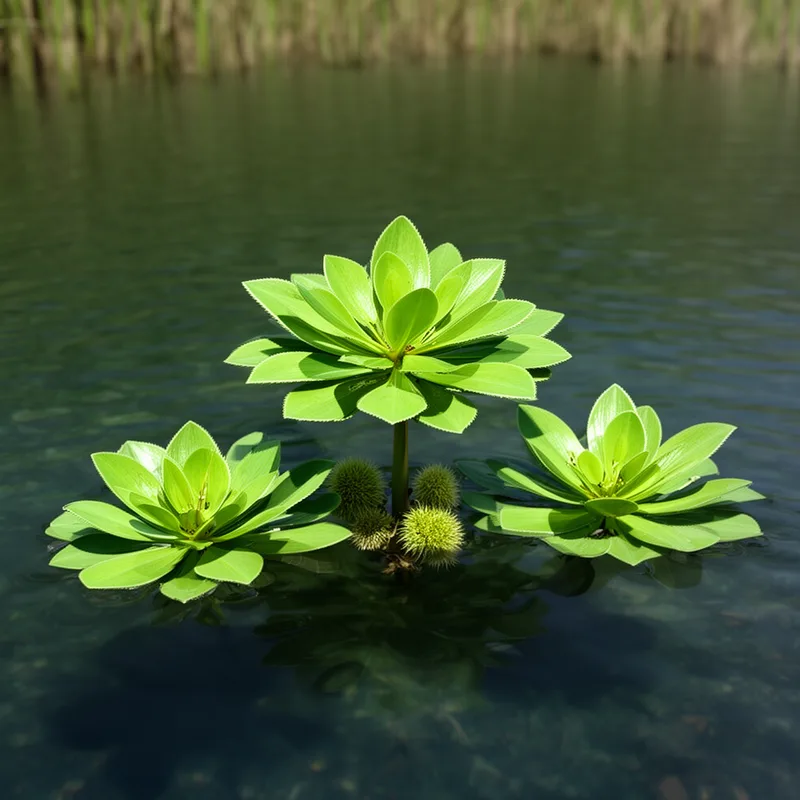
Trapaceae
- noun
- /trəˈpeɪʃiˌi/
- Specialized
- The water chestnut plant belongs to the Trapaceae family in some botanical classifications.
Examples
-
The Trapaceae family includes several species of water chestnuts.
-
Taxonomists reclassified several species after reviewing the characteristics of Trapaceae.
-
Recent studies have debated whether Trapaceae should remain distinct from Onagraceae.
-
Did you know that Trapaceae are often found in freshwater habitats?
-
The water chestnut plant belongs to the Trapaceae family in some botanical classifications.
-
Several species included in the Trapaceae family have unique adaptations to aquatic environments.
-
Did you know that Trapaceae are often found in freshwater habitats?
Surface Forms
Morphology
Trapaceae = Trapa (opaque) = Trapa + aceae
Formed by adding the specialized botanical suffix '-aceae' to the genus name 'Trapa'; the taxonomic meaning is unlikely to be deducible by a B1 learner.
Etymology
Trapaceae comes from the plant name Trapa and the botanical ending -aceae. The ending -aceae marks a group or 'family' of plants and Trapa is the 'water chestnut', so Trapaceae means the plant family built around that aquatic flowering plant.

