
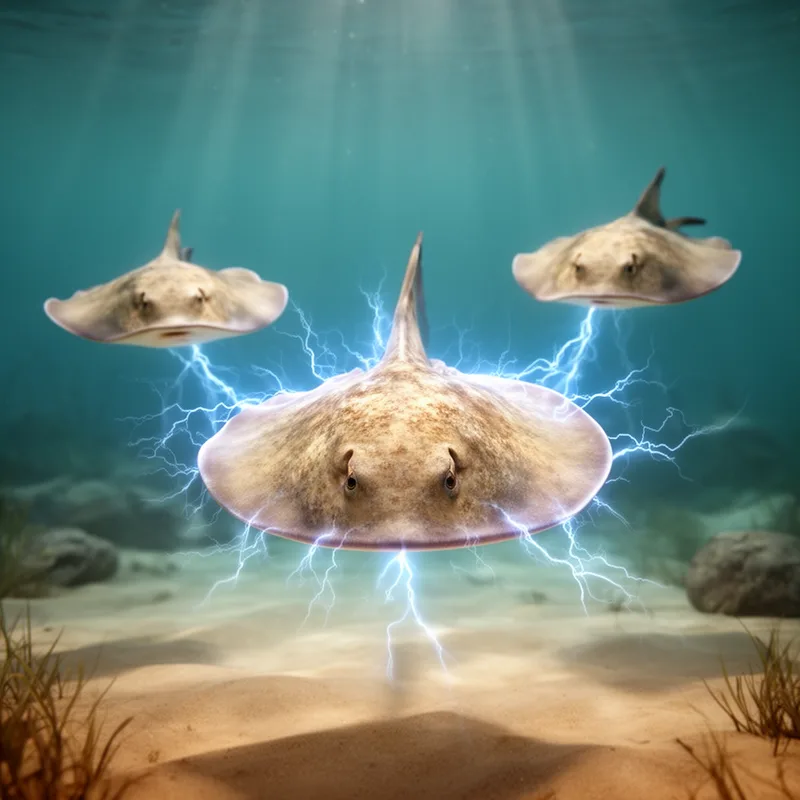
Torpediniformes
- noun
- /ˌtɔrːpɪˈdɪnɪˌfɔrmiːz/
- Specialized
- The Torpediniformes, commonly known as electric rays, have flattened bodies that resemble torpedoes.
Examples
-
The Torpediniformes are well known for their ability to generate electric shocks.
-
Scientists have discovered a new species within the Torpediniformes that has unique electric organs.
-
Many members of the Torpediniformes order can be found in warm and temperate Oceans around the world.
-
The Torpediniformes are fascinating creatures found in warm coastal waters.
-
Did you know that Torpediniformes can produce electric shocks?
-
Researchers are studying the Torpediniformes to understand how they use electricity for hunting and defense.
-
In the coastal waters of the Caribbean, you can often spot Torpediniformes gliding across the sandy sea floor.
Synonyms
 1
9.6

A flat sea fish that makes strong electric shocks to catch prey


 1
7.2
A flat sea fish with a rounded body that lives on the sea floor and gives strong electric shocks
A group of rays with torpedo-shaped bodies that can make electric shocks
Compounds
- Specialized
A group of rays with torpedo-shaped bodies that can make electric shocks
Surface Forms
Morphology
Etymology
Torpediniformes comes from the same root as torpedo and the Latin torpere, which means 'to be numb'. The name fits these electric rays because their shocks can make you feel numb and their flat bodies look like a torpedo, so the word links both the shock and the shape.