
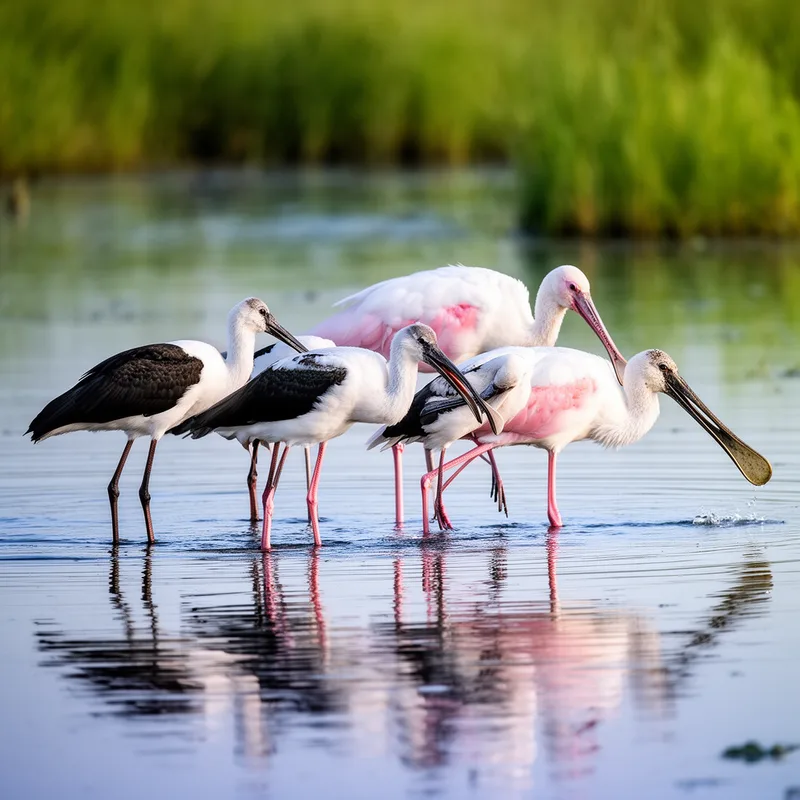
Threskiornithidae
- noun
- /θrɛsˌkɪərˈnɪθɪˌdeɪ/
- Specialized
- The family Threskiornithidae includes both the ibises and the spoonbills.
Examples
-
Modern classification places spoonbills within the bird family Threskiornithidae.
-
The Threskiornithidae family includes various species of ibises.
-
Researchers observed several unique feeding habits among members of the Threskiornithidae.
-
Many Threskiornithidae are found in wetlands around the world.
-
The family of large wading birds known as Threskiornithidae features long legs and unique bills.
-
Birdwatchers often seek to identify the different species within Threskiornithidae, such as ibises and spoonbills.
-
In wetlands globally, one can frequently spot members of the Threskiornithidae family wading in the shallow waters.
Synonyms
A family of water birds with long, down-curved bills like ibises and spoonbills
Surface Forms
Morphology
Threskiornithidae = Threskiornis (opaque) = Threskiornis + idae
Formed by the genus name plus the technical taxonomic family suffix '-idae'; this is a specialized scientific formation not transparent to average learners.
Etymology
Threskiornithidae comes from Greek parts threskio- meaning 'religious' or 'sacred' and -ornith- meaning 'bird', with -idae showing a family. So it literally means a 'sacred bird family', which fits because ibises were seen as sacred in ancient times and today the name is used for the family of ibises and spoonbills.

