
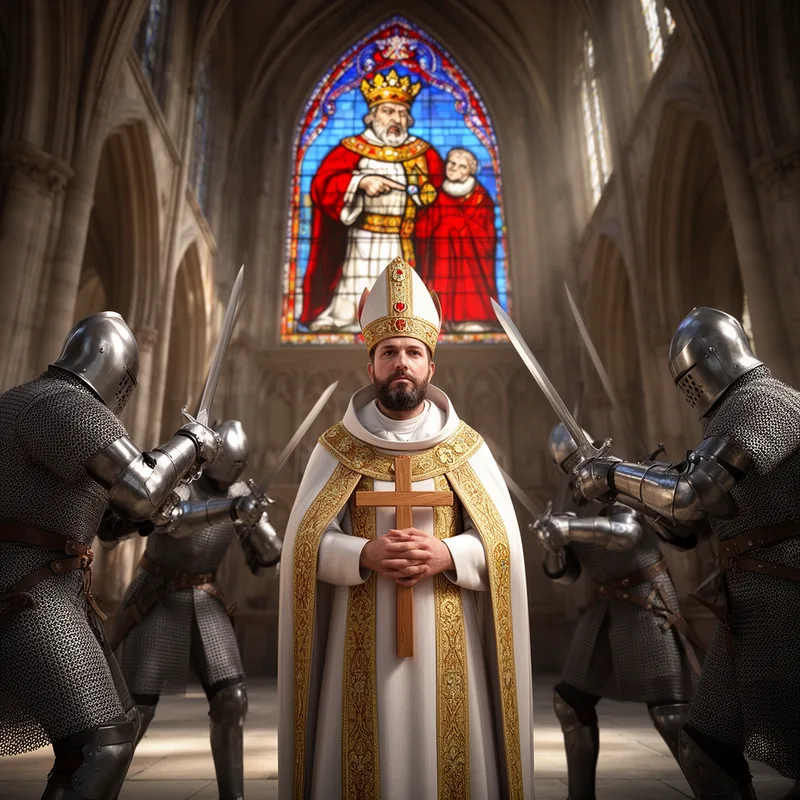
Thomas Becket


 1
7.8
- proper noun
- Formal
- Visitors to Canterbury Cathedral often learn about the martyrdom of Thomas Becket.
Examples
-
The conflict between King Henry II and Thomas Becket changed English history.
-
Did you know that Thomas Becket was murdered in his own cathedral?
-
Thomas Becket was canonized as a saint just three years after his death.
-
The martyrdom of Thomas Becket had a profound impact on the Church.
-
Thomas Becket was canonized as a saint just three years after his death.
-
The conflict between King Henry II and Thomas Becket changed English history.
-
Visitors to Canterbury Cathedral often learn about the martyrdom of Thomas Becket.
Synonyms
 1
9.0
An English church leader who became archbishop of Canterbury and was killed after opposing King Henry II
A church leader in England who opposes the king and later becomes a saint
A senior church leader in Canterbury remembered as a saint for being killed defending the Church against the king
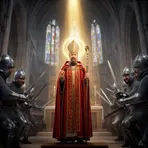
An Archbishop of Canterbury who was killed after opposing the king and later became a saint
Surface Forms
Morphology
Thomas + Becket
This is a proper name referring to a specific historical person; the identity and biographical meaning are not compositionally derived from the constituents. A B1 learner who knows the words 'Thomas' and 'Becket' as names would not be able to infer his role as Archbishop of Canterbury or his martyrdom without explicit cultural/historical knowledge, so the expression is opaque.
Etymology
Thomas Becket was a church leader in the 1100s who argued with King Henry II about the church's rights and was killed by knights inside Canterbury Cathedral. Because he died for his beliefs, people soon 'made him a saint', and his name is remembered as a symbol of standing up to rulers.