
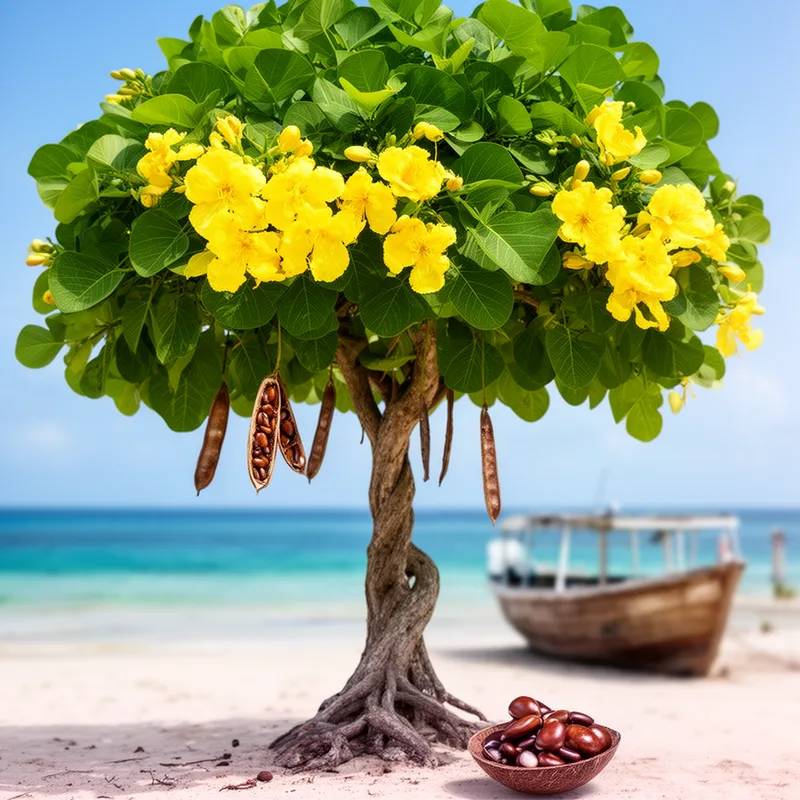
Thespesia populnea
- noun
- /θɛsˈpiːziə pɒpʊlˈniːə/
- Specialized
- The Thespesia populnea tree, known for its heart-shaped leaves, thrives along tropical coastlines.
Examples
-
The wood of the Thespesia populnea is prized for its durability in boat building.
-
The seeds of Thespesia populnea are used to produce oil in some cultures.
-
Along tropical beaches, you can often spot the distinctive flowers of the Thespesia populnea.
-
The Thespesia populnea tree is often found near the ocean.
-
Thespesia populnea produces beautiful yellow flowers.
-
Many coastal regions cultivate the Thespesia populnea for its striking yellow and purple flowers.
-
Craftsmen appreciate the close-grained wood of Thespesia populnea for making durable furniture.
Synonyms

A tropical coastal tree with heart-shaped leaves and yellow and purple flowers

A tropical coastal tree with heart-shaped leaves, bright yellow and purple flowers, and red wood prized by carpenters
Surface Forms
Morphology
Thespesia + populnea
This is a Latin binomial (taxonomic) name composed of specialized genus and species labels rather than ordinary English words; the constituents are not common vocabulary and 'populnea' is not a recognizable English word. A B1 learner who knows ordinary English meanings of similar roots would still not be able to derive the specific sense 'a pantropical/seaside tree with particular features', so the expression is lexicalized and unpredictable.
Etymology
Thespesia populnea is a scientific name made of the group name Thespesia and the species word populnea, which may mean 'poplar-like' because its rounded, heart-shaped leaves look a little like small poplar leaves. So the name points to a coastal tree with bright flowers and strong wood used for boats, which helps you remember the plant behind the name.

