
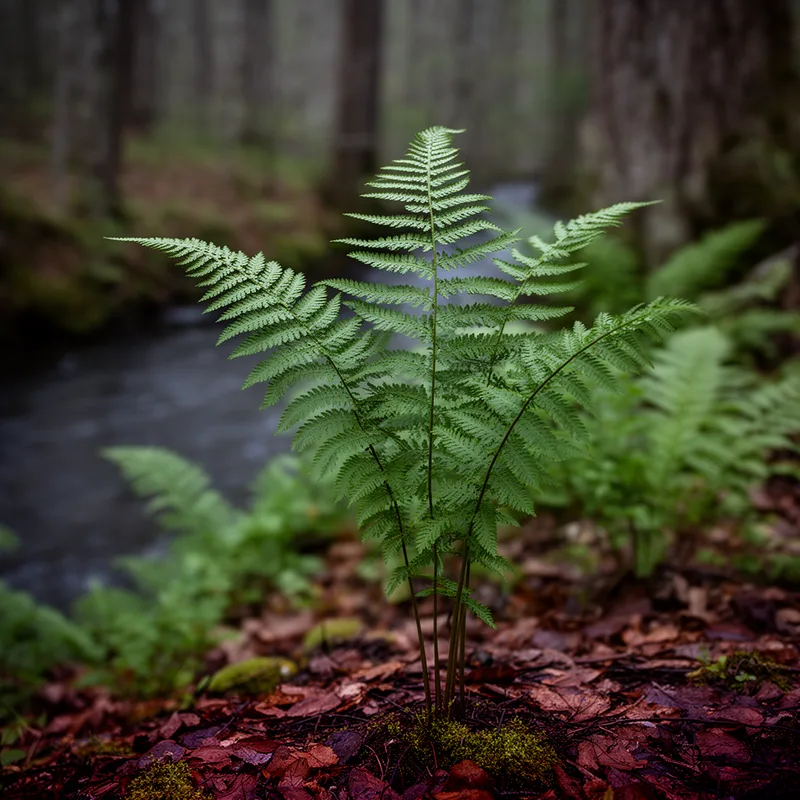
Thelypteris simulata
- noun
- Specialized
- The fronds of Thelypteris simulata are finely divided, giving the fern a delicate appearance.
Examples
-
The damp woodlands of New England are home to the beautiful Thelypteris simulata.
-
I saw a Thelypteris simulata growing near the river.
-
Botanists identified the rare Thelypteris simulata growing along the shaded riverbanks.
-
The Thelypteris simulata is often found in moist, shaded areas.
-
The fronds of Thelypteris simulata are finely divided, giving the fern a delicate appearance.
-
Botanists identified the rare Thelypteris simulata growing along the shaded riverbanks.
-
The damp woodlands of New England are home to the beautiful Thelypteris simulata.
Synonyms

A delicate fern with feathery leaves that grows in the eastern United States
Delicate feathery fern that grows in moist woods and wetlands in the eastern United States
Surface Forms
Morphology
Thelypteris + simulata
This is a Latin binomial (a taxonomic species name) functioning as a proper noun; even if a learner knows 'Thelypteris' refers to a genus of ferns, the epithet 'simulata' is a conventional Latin label rather than a productive English morpheme. Species names are arbitrary labels for a specific taxon and do not yield the detailed descriptive meaning, so a B1 learner could not derive the full sense from the parts.
Etymology
Thelypteris simulata may come from old Greek and Latin words: Thelypteris mixes 'thely' meaning 'female' and 'pteris' meaning 'fern', and simulata means 'imitating' or 'looking like'. So the name gives an image of a delicate 'female' fern that looks very much like another species, and that image helps explain and remember the plant's name.

