
Teucrium chamaedrys
- noun
- Specialized
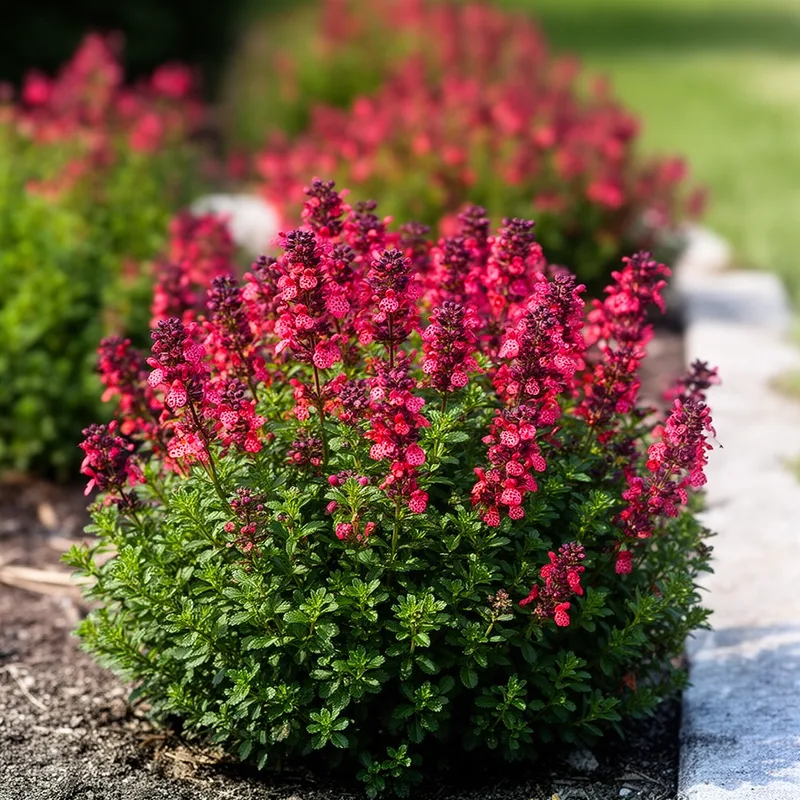
- Teucrium chamaedrys is often grown in gardens for its attractive, aromatic foliage.
Examples
-
Herbalists have used Teucrium chamaedrys for centuries in traditional remedies.
-
The Teucrium chamaedrys is often used in traditional medicine.
-
The borders of the park were lined with flowering Teucrium chamaedrys.
-
Have you seen the Teucrium chamaedrys blooming in the garden?
-
The garden was filled with vibrant flowers, including the lovely Teucrium chamaedrys that bloomed in shades of red and purple.
-
In the botanical garden, visitors admired the bright rose flowers of Teucrium chamaedrys that added color to the landscape.
-
A popular choice for rock gardens, Teucrium chamaedrys features beautiful blossoms and is known for its hardiness.
Synonyms

A low bush with bright pink or purple flowers grown in gardens
Surface Forms
Morphology
Teucrium + chamaedrys
This is a Latin binomial (genus + species) used in botanical taxonomy; the species epithet 'chamaedrys' is not an English word and is not transparent. Even if a learner recognised 'Teucrium' as a plant genus, the common name 'wall germander' and the specific identity cannot be derived from the constituents without specialist botanical knowledge.
Etymology
Teucrium chamaedrys may get its name from an old story: Teucrium may come from King Teucer, who was said to use the herb, and chamaedrys comes from Greek words meaning 'on the ground' and 'oak' because the plant grows low and its leaves look like little oak leaves. So the Latin name gives a simple image—a low, oak-like herb once used as a medicine.

