
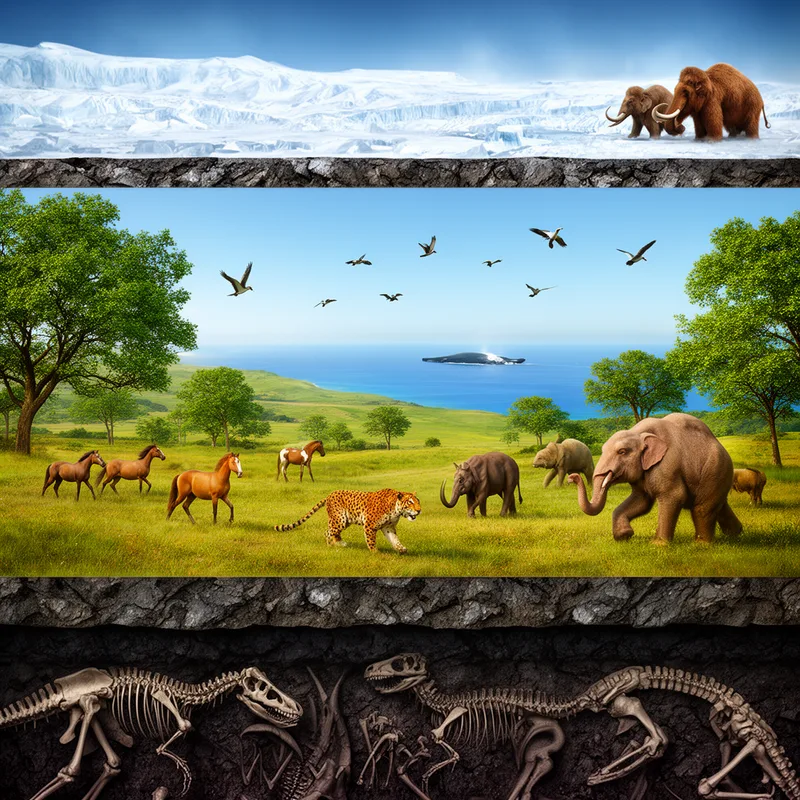
Tertiary period
- noun
- /ˈtɜrʃiˌɛri ˈpɪərɪəd/
- Archaic
 :
período Terciario
:
período Terciario
- His research focuses on marine mammal fossils from the Tertiary period along the mid-Atlantic coast of North America.
Examples
-
The layer marks the boundary between the Cretaceous and Tertiary period.
-
Tertiary Period (65 to 1.65 million years ago)...
Blog text (14) -
The immediate ancestors of the weasels appeared toward the end of the Tertiary period, when the newly evolved grasses were replacing forests over vast areas of the North Temperate Zone.
Academic text (1991) -
Uplift of the Rocky Mountains in the Late Cretaceous and Early Tertiary periods caused the withdrawal of the sea from Oklahoma and imparted an eastward tilt to the entire state.
Blog text (14) -
Many species of doglike marsupials lived in South America during the Tertiary period, about 65 to 2 million years ago.
Synonyms
 1
8.9
1
8.9

An old name for the geologic time about 63 million to 2 million years ago between the Cretaceous and Quaternary
Surface Forms
Morphology
The phrase is compositionally built from a named adjective 'Tertiary' and the noun 'period', so a learner who knows both words can infer it denotes a particular kind of time period (a geological interval). However, 'Tertiary' is a technical, historically used geologic label and the specific timeframe and status (former name) are encyclopedic facts not recoverable from the constituents alone. Therefore the meaning is only partially predictable from the parts.
Etymology
Tertiary period gets its name from an old system that labelled long parts of Earth's history as 'first', 'second' and 'third', so tertiary literally meant 'third' and period meant a stretch of time. That's why Tertiary period came to mean the 'third' big time in Earth history, the time after the dinosaurs died and before the most recent times.