

Tephrosia virginiana
- noun
- Specialized
- Gardeners value Tephrosia virginiana for its attractive flowers and nitrogen-fixing ability.
Examples
-
Botanists study Tephrosia virginiana for its natural production of rotenone.
-
The prairie was dotted with clusters of Tephrosia virginiana in full bloom.
-
The Tephrosia virginiana plant thrives in sandy soils.
-
Have you seen the Tephrosia virginiana blooming this spring?
-
Farmers often plant Tephrosia virginiana to enhance soil quality through nitrogen fixation.
-
During the summer, the vibrant yellowish-rose flowers of Tephrosia virginiana attract various pollinators.
-
In traditional medicine, Tephrosia virginiana has been utilized as a source of rotenone for pest control.
Synonyms
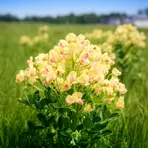
A low bush with soft leaves and small yellow-pink flowers that grows in eastern North America

A North American bush with soft hairy leaves and pale flowers sometimes used to kill insects
Surface Forms
Morphology
This is a standard Linnaean binomial made of the genus name 'Tephrosia' and the Latin epithet 'virginiana' (meaning 'from Virginia'), so the combined form straightforwardly denotes a species of Tephrosia originating in Virginia. Although specific botanical details (habit, flower colour, chemical uses) are not implied by the name, an average B1 learner who knows the two constituents would understand it refers to a plant species and its geographic origin.
Etymology
Tephrosia virginiana may come from Greek and a place name: Tephrosia refers to the plant's ash-coloured, soft, hairy leaves ('tephros' means 'ash'), and virginiana means 'from Virginia'. So the name paints a clear picture of a grey, hairy little shrub from Virginia and helps you remember what it looks like.

