
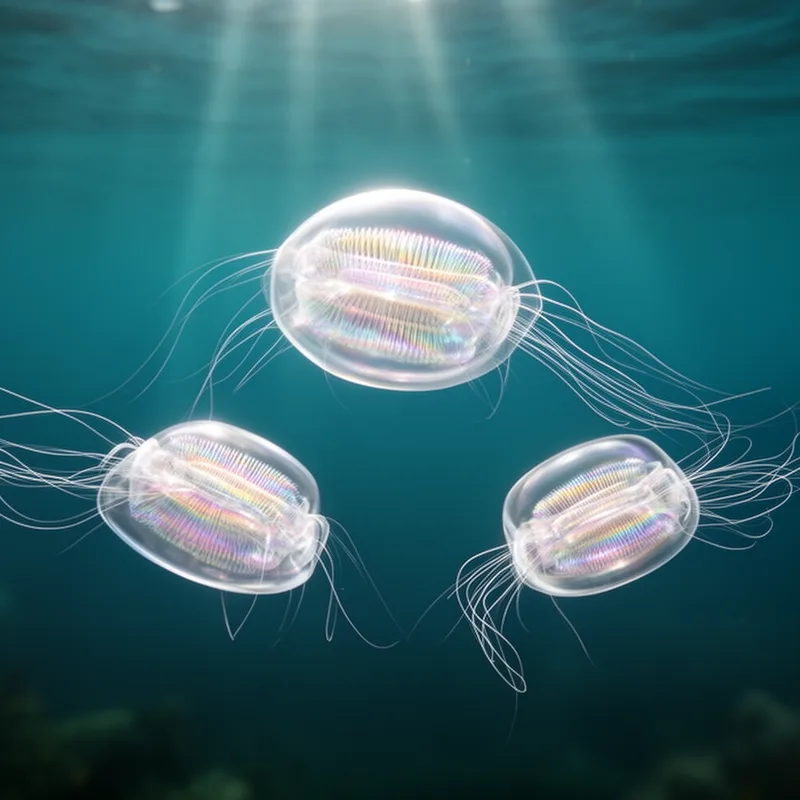
Tentaculata
- noun
- /tɛnˈtækjʊˌleɪtə/
- Specialized
- The class Tentaculata is distinguished by its retractile tentacles.
Examples
-
The class Tentaculata includes ctenophores that capture prey with their retractile tentacles.
-
Scientists observed the unique feeding behavior of Tentaculata in the open ocean.
-
Many species within Tentaculata play important roles in marine ecosystems.
-
The Tentaculata are fascinating creatures of the ocean.
-
Many Tentaculata have beautiful, colorful tentacles.
-
Researchers study how Tentaculata use their tentacles to defend themselves in their natural habitats.
-
Aquariums often display Tentaculata to educate visitors about their retractile tentacles and unique adaptations.
Surface Forms
Etymology
Tentaculata comes from the Latin word tentaculum meaning 'a feeler' and the ending -ata meaning 'having'. It shares the root with the English word tentacle, so Tentaculata means 'animals having tentacles', which explains why they have tentacles that can pull back.

