
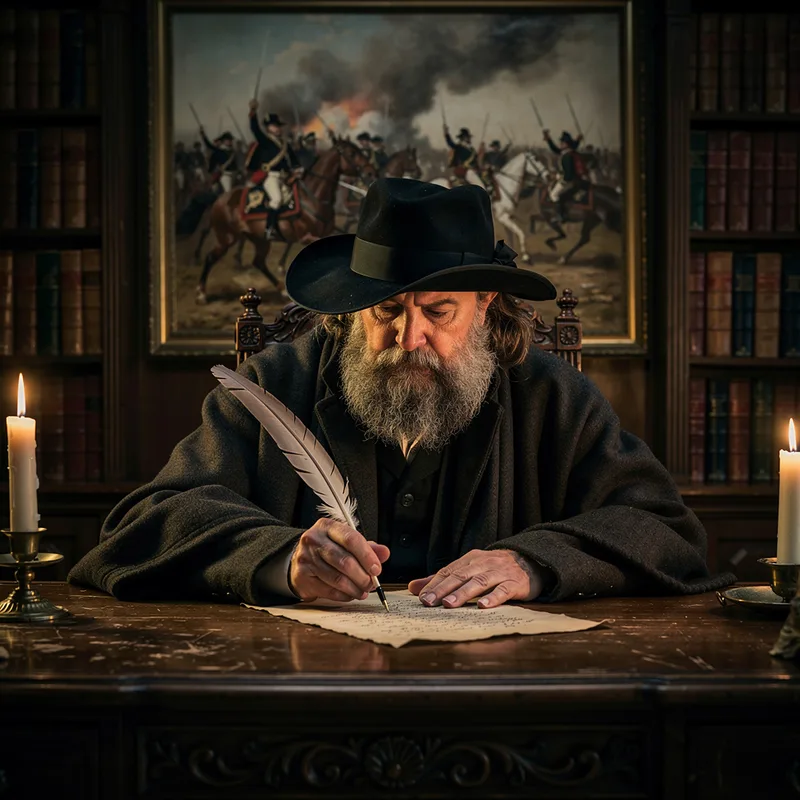
Tennyson
 9
8.4

- proper noun
- /ˈtɛnɪsən/
- Literature
- I love Blake's visionary passion, but I came to trust Tennyson more than I ever trusted Blake.
- Alfred Tennyson
- Lord Tennyson
- Tennyson's poem
Loading YouTube…
Watch on YouTubeBut in my poetry reading, I read Dante, I read Tennyson, I read Whitman, Dickinson, Ashbury.
- But in my poetry reading, I read Dante, I read Tennyson, I read Whitman, Dickinson, Ashbury.
- And I recognise that in something similar in Tennyson.
- The little almsman of spring Bowers, Oscar Wilde, found sweet fretful swarms of grumbling bees and Tennyson the murmuring of innumerable bees.
Examples
-
With this background, we can grasp the setting for Tennyson's famous image of "Nature, red in tooth and claw."
Academic text (1992) -
When he reads Tennyson, the room shakes; he has such a voice.
Fiction book (1995) -
A few words of Alfred, Lord Tennyson... speaking to something which we all know, and should never forget.
-
For instance, consider the following line by Tennyson, the opening line from one of the poems in our sample:
Academic text (2002) -
Their ardent friendship was clearly the key emotional experience of Tennyson's life.
Academic text (1992) -
The central adage comes from Alfred, Lord Tennyson's In Memoriam A. H. H., a poem.
Academic text (2012) -
During Grove's tenure as editor of Macmillan's Magazine, Tennyson was a prized contributor.
Academic text (1995) -
Alfred, Lord Tennyson was celebrated for his poignant poetry that resonated with the Victorian era.
-
Many students study Tennyson in literature classes to understand the themes of loss and remembrance in his works.
-
The poem 'In Memoriam' by Tennyson is often analyzed for its exploration of grief and love.
Synonyms
 2
7.6
An English poet of the 1800s who was the official poet for Queen Victoria
 1
7.9
English poet in Queen Victoria's time who wrote famous poems like The Charge of the Light Brigade
Surface Forms
Etymology
Tennyson is an English family name formed by adding -son ('son of') to a parent's name like Tenny, so it originally meant 'son of Tenny', just like Johnson means 'son of John'. That's why the name Tennyson now refers to the famous poet Alfred, Lord Tennyson.