
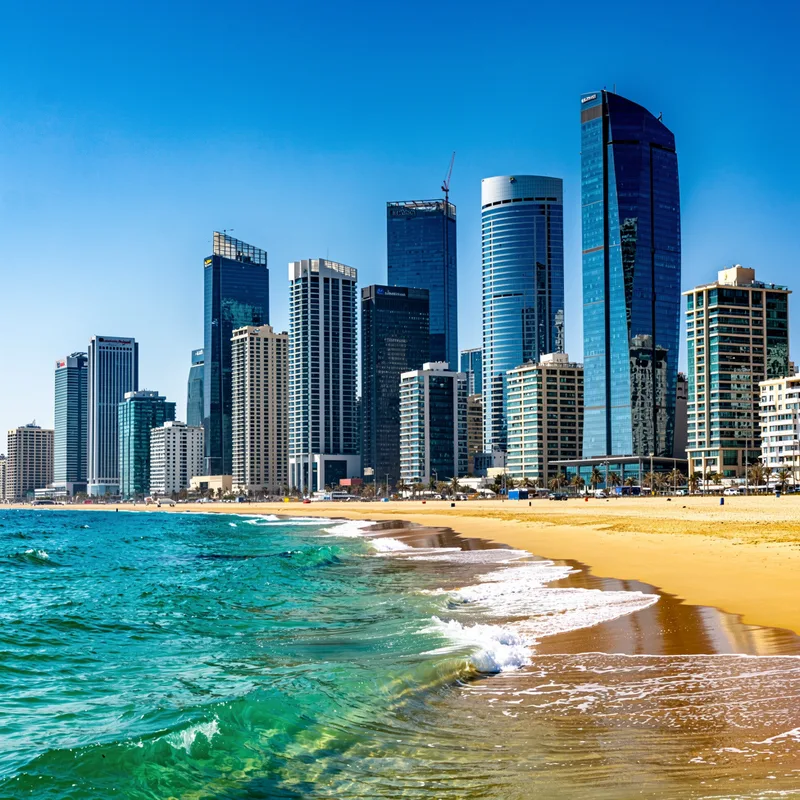
Tel Aviv
 127
3.7
127
3.7

- proper noun
- /tɛl əˈviːv/
- After arriving in Tel Aviv, we explored the vibrant local markets and cafes.
- based in Tel Aviv
- Tel Aviv University
- Tel Aviv, Israel
Loading YouTube…
Watch on YouTubeI can't make sense out of someone who straps a bomb on themselves and goes and blows up a bus in Tel Aviv or flies a plane into the World Trade Center.
- I can't make sense out of someone who straps a bomb on themselves and goes and blows up a bus in Tel Aviv or flies a plane into the World Trade Center.
- And so it's no surprise that the stories in my collection move from McCarthy era Los Angeles to contemporary Tel Aviv to communist era Prague and back again.
- She was there nearly every summer for the last five or six years, sweeping Tel Aviv, where she felt perfectly at home with her beauty, her energy and her ideas.
Examples
-
Flight 136 to Tel Aviv is now boarding.
-
And I'll be in Tel Aviv waiting for my commission.
-
Three hours south of Tel Aviv.
-
Are you still in Tel Aviv?
-
Come to my office in Tel Aviv.
-
- I am going to Tel Aviv.
-
If a politician wants to serve Israel, they should run in Tel Aviv, not in Washington.
Blog text (3) -
In Tel Aviv, I spent time with a friend of Moroccan-Jewish descent.
Academic text (2015) -
Caesarea is located along the Mediterranean Sea between Haifa and Tel Aviv.
Academic text (2005) -
Many tourists dream of visiting Tel Aviv for its beautiful beaches.
Synonyms

A large city on Israel's Mediterranean coast that is the country's main business and finance center

A city in western Israel on the Mediterranean that is the country's largest city and business center
Surface Forms
Morphology
Tel + Aviv
This is a lexicalized place name (toponym) whose meaning as a specific city cannot be derived from its parts. The supplied constituent forms are not ordinary English words (dictionary shows ‘not found’) and even if a learner knew the Hebrew senses (e.g. tel = mound, aviv = spring) they would at best infer a geographic descriptor, not the fact that it designates Israel's largest city and financial centre. Toponyms are language-specific and non-compositional for B1 learners, so the item is opaque.
Etymology
Tel Aviv comes from Hebrew: Tel means a low hill made of old ruins and Aviv means 'spring'. One popular story says the name was chosen to show a new city growing on old land, so the name reminds people that Tel Aviv is both modern and tied to the past.