

Tangier pea
- noun
- UK
- The Tangier pea is prized for its vibrant, odorless blooms in Mediterranean gardens.
Examples
-
Unlike the sweet pea, the Tangier pea does not have a fragrant scent.
-
Gardeners appreciate the Tangier pea because it adds a splash of color in spring.
-
The Tangier pea blooms beautifully in spring.
-
I saw a Tangier pea in the botanical garden.
-
The Tangier pea is known for its vibrant, odorless flowers that enhance garden landscapes.
-
In many gardens, the Tangier pea brings a lively burst of color during the spring season.
-
Unlike sweet peas, the Tangier pea produces beautiful blooms without any noticeable fragrance.
Synonyms
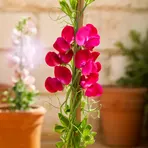
A North African yearly plant like the sweet pea with showy flowers and no scent

A North African annual plant with bright unscented pea-like flowers
How Scented


Surface Forms
Morphology
The noun phrase is fully compositional: 'Tangier' (a Moroccan city) plus 'pea' (a plant) denotes a pea associated with Tangier or North Africa. The place-name + noun pattern commonly signals origin or variety across languages, so a B1 learner who knows both words can infer it refers to a type/variety of pea.
Etymology
Tangier pea likely gets its name from the city of Tangier in North Africa and the word pea, because gardeners in Europe first met a pea-like plant that came from that place. It looked like a 'sweet pea' with bright flowers but had little smell, so the name now tells us it is a North African pea with showy, scentless blooms.