
Syngnathidae


 1
9.9
- noun
- /sɪŋˈnæθɪdi/
- Specialized
- According to Vincent et al. (2011), there is a need for global, systematic, and long-term monitoring of the Syngnathidae in relation to fishing to obtain data that allow us to assess the conservation status of their populations and to obtain the commercial records.
Examples
-
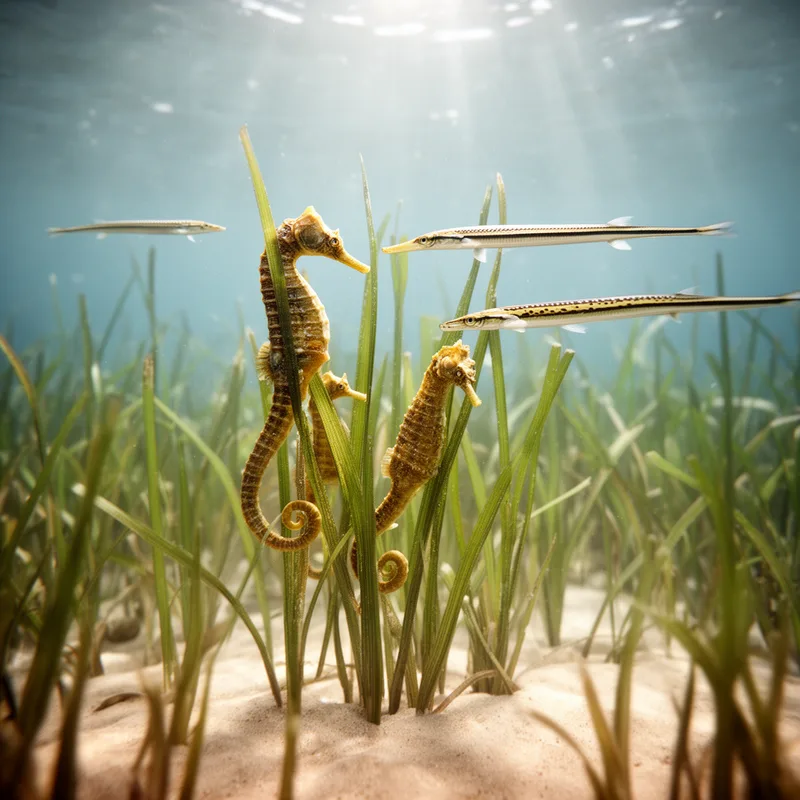
The seahorse is a fascinating member of the family Syngnathidae, known for its unique appearance and behavior.
-
Researchers study the Syngnathidae to learn more about their role in marine ecosystems.
-
The sole genus of seahorses (Hippocampus) is found in the family Syngnathidae, which also includes two genera of seadragons and more than fifty genera of pipefishes.
Academic text (1990) -
The Syngnathidae family includes various species of pipefish, which are often found in shallow waters.
Surface Forms
Morphology
Syngnathidae = syngnathid (opaque) = syngnath + idae
This is a Latinized scientific family name formed with the specialized zoological suffix '-idae', which is not a productive or familiar suffix for average learners.
Etymology
Syngnathidae comes from old Greek parts: syn- 'together' and gnathos 'jaw', and the ending -idae shows it is a family of animals. That's why these fishes have a name that means 'joined jaws', because many have long, tube-like mouths with the jaws joined together into a snout.