
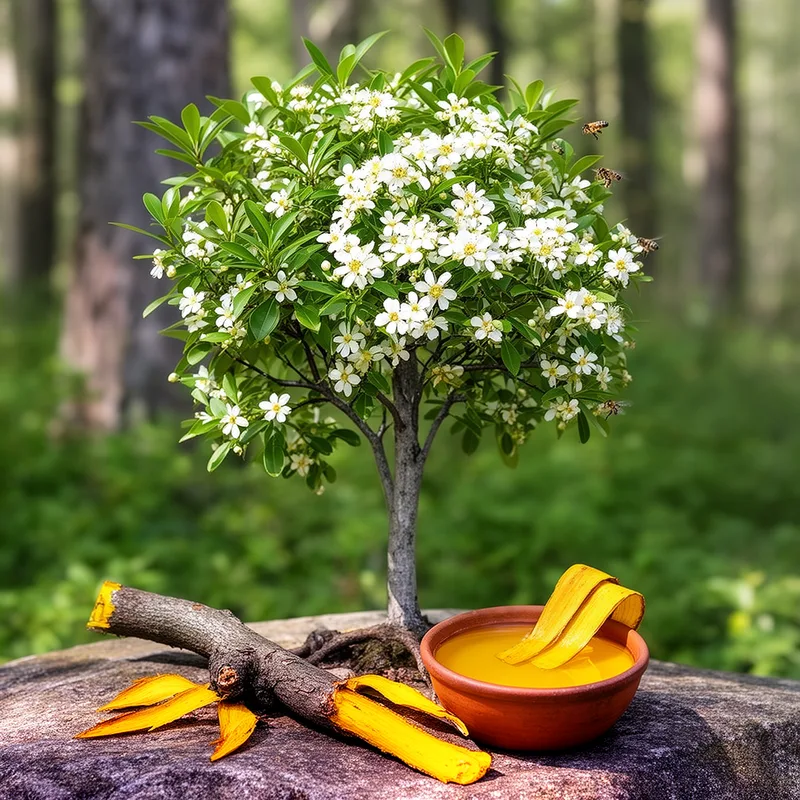
Symplocus tinctoria
- noun
- Specialized
- The bark of Symplocus tinctoria was once prized for its use as a natural dye.
Examples
-
We spotted several Symplocus tinctoria trees in bloom along the woodland trail.
-
The Symplocus tinctoria tree is known for its fragrant flowers.
-
Botanists study Symplocus tinctoria for its ecological benefits and distinctive yellowwood.
-
Many artisans use Symplocus tinctoriae leaves to create natural dyes.
-
The bark of Symplocus tinctoria is used by artisans to create a vibrant yellow dye.
-
We observed the Symplocus tinctoria tree, distinguished by its fragrant white flowers and yellowwood.
-
Many craftspeople value Symplocus tinctoria for its leaves and bark, which yield natural dyes.
Synonyms
A small tree with white fragrant flowers whose leaves make yellow dye
Surface Forms
Morphology
Symplocus + tinctoria
This is a Latin binomial scientific name rather than a compositional English phrase; knowing the genus label 'Symplocus' only signals a plant taxon and the epithet 'tinctoria' is not defined here (and is not transparent to a B1 learner). The specific sense ('a small yellowwood tree that yields a yellow dye') cannot be derived from the provided constituent meanings, so the expression is not predictable from its parts.
Etymology
Symplocus tinctoria may come from the tree's old use as a source of yellow dye: people boiled the bark and leaves to make a bright yellow color, so the word tinctoria points to being 'used for dyeing'.

