
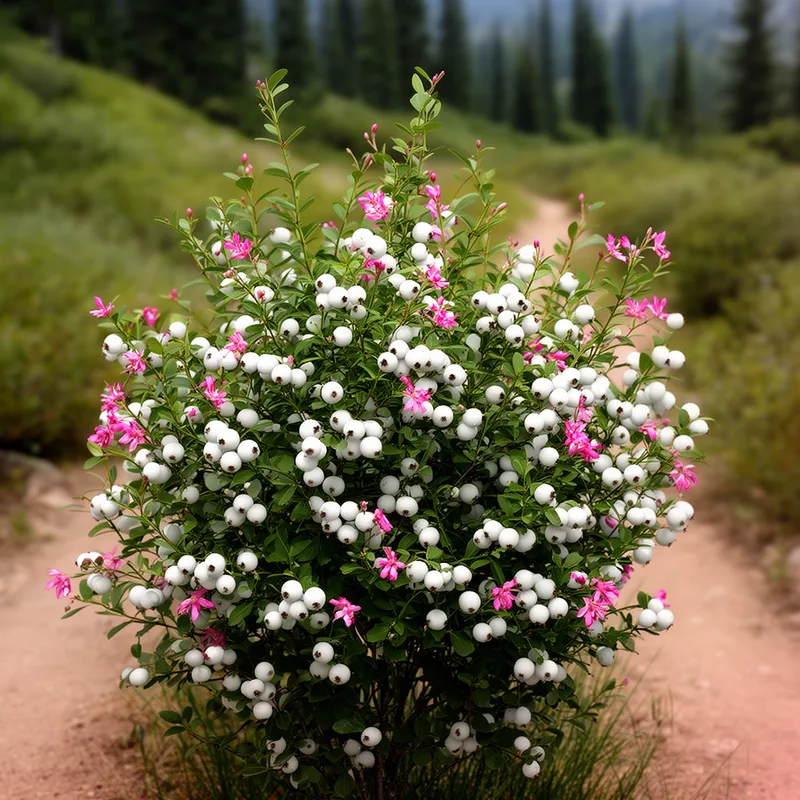
Symphoricarpos alba
- noun
- Specialized
- Gardeners value Symphoricarpos alba for its hardiness and the unique round white berries that decorate the shrub in winter.
Examples
-
The Symphoricarpos alba is easily recognized by its clusters of white berries in late summer.
-
Hikers often spot Symphoricarpos alba growing along forest edges and trails in western Canada.
-
Gardeners value Symphoricarpos alba for its hardiness and attractive pale berries.
-
The Symphoricarpos alba is often found in gardens.
-
Many people admire the beauty of Symphoricarpos alba during spring.
-
Hikers often spot Symphoricarpos alba growing along the forest edges, particularly noted for its lovely spikes of pink flowers.
-
The Symphoricarpos alba is easily recognized by its distinctive clusters of white berries, which provide food for wildlife.
Synonyms

A small bush with pink flower spikes and round white berries
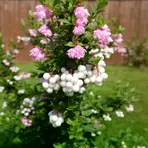
A bush with groups of pink flowers and clusters of white round berries
Surface Forms
Morphology
Symphoricarpos + alba
This binomial name is fully compositional: Symphoricarpos names a shrub (notably with white/pink berries) and the epithet 'alba' is Latin for 'white', so together they literally denote the white form of the shrub (snowberry). Therefore, if a learner knows both constituents, the meaning is directly derivable, although in practice 'alba' is a Latin element that may be unfamiliar to many learners.
Etymology
Symphoricarpos alba comes from Greek parts symphorein and karpos, meaning 'to bear together' and 'fruit', plus Latin alba meaning 'white'. The name describes a shrub that carries white berries in small groups, which is why it is known as the snowberry.

