
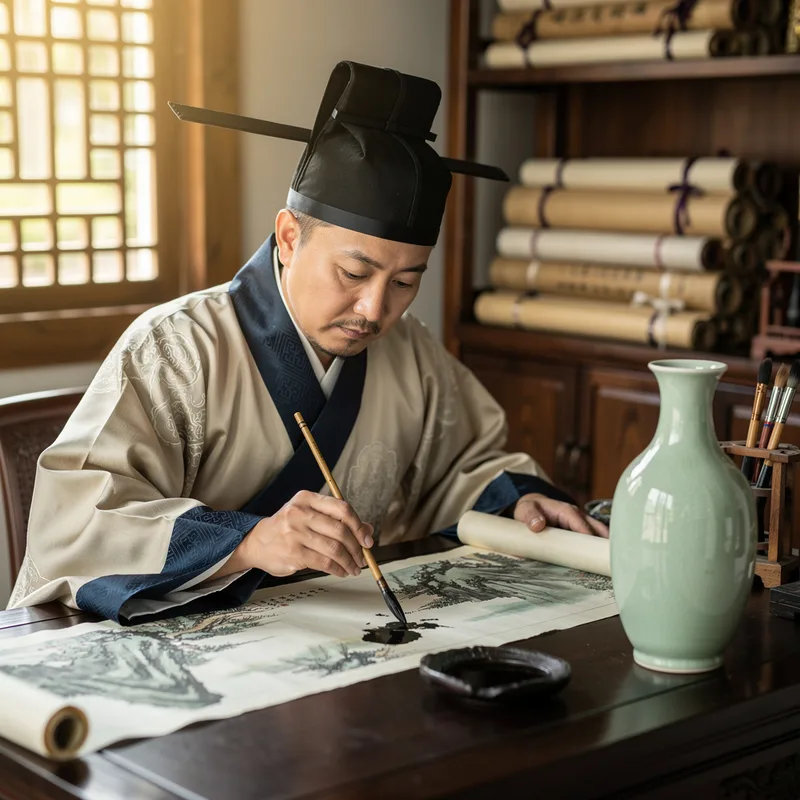
Sung
 16
9.1
16
9.1

- proper noun
- /sʌŋ/
- (Sung-Shih, History of Sung Dynasty, chap. 12)
Examples
-
The koan method of inquiry began in China in the twelfth century with the Sung masters.
Academic text (1994) -
Green for the Sung, yellow for the Han.
Fiction book (1998) -
You know, Put... during the Sung Dynasty, there was a great mystic--
-
Chou Ch'en's brushwork suggests that he might have also derived aesthetic values from the Sung master, Li T'ang (1070-1150).
Academic text (1996) -
The Sung dynasty is known for its incredible advancements in Chinese art and culture.
-
During the time of the Sung, many great philosophers emerged, shaping the intellectual landscape of China.
-
The inventions and innovations of the Sung dynasty laid the foundation for future technological progress in China.
Synonyms
 45
8.7
45
8.7
A Chinese dynasty that ruled from 960 to 1279, famous for art and inventions


 1
8.1
1
8.1
A royal Chinese dynasty from 960 to 1279, famous for its art and learning
A period in China from 960 to 1279 when a ruling family makes great art and literature
Compounds
Surface Forms
Etymology
The word Sung is an older English spelling of the Chinese dynasty Song, which was named after an old state called 'Song'. So Sung refers to the imperial period in China from 960 to 1279, a time famous for its art, writing, and learning.