
Sudra


 1
9.9
- noun
- /ˈsuːdrə/
- Indian
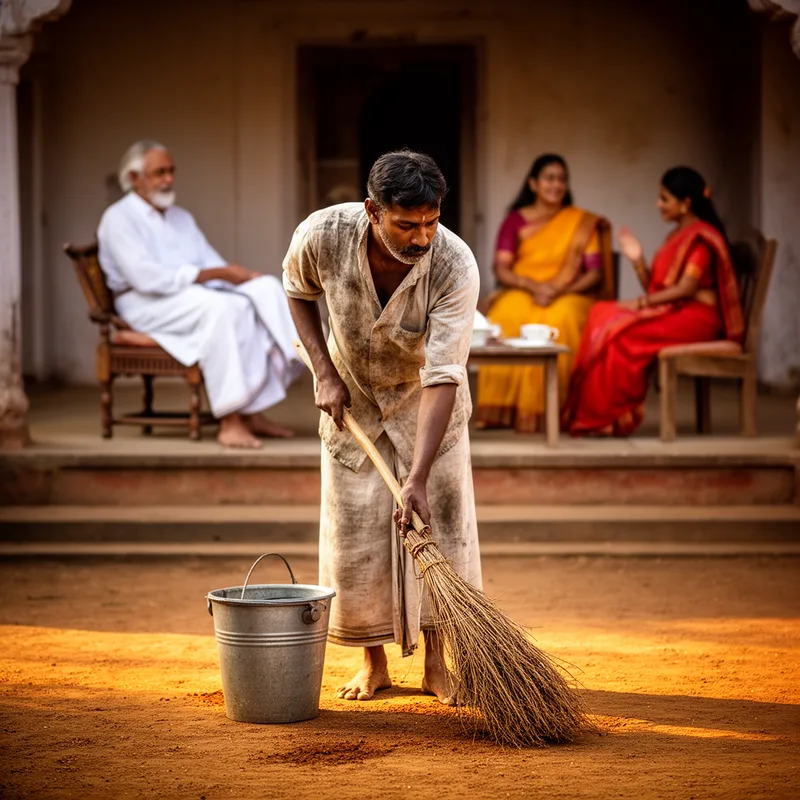
- In ancient India, a Sudra typically worked in service roles, providing labor for higher castes.
Examples
-
The king should carefully compel, Vaisyas and Sudra to perform the work for them;
-
1996b. Why I Am Not a Hindu: A Sudra Critique of Hindutva Philosophy, Culture, and Political Economy. Calcutta: Samya.
Academic text (2005) -
But a Sudra, whether bought or unbought, he may be compelled to do servile work;
-
For if these two (castes) swerved from their duties, they would throw this world into confusion, A Sudra, though emancipated by his master, not released from servitude;
-
31. The man who cannot rise early in the morning and cannot take the brahminical principle—sudra, ksatriya, vaisya—should be helped with the knowledge acquired by the brahmana.
Blog text (12) -
Some of these sub-castes, whose ritual status is relatively low in the localized caste hierarchies of northern India and recognized as belonging to the Sudra varna, were incorporated with clean castes and given equal rank.
Academic text (1994) -
He was proud to be a Sudra, fulfilling his duties with dedication despite societal expectations.
-
The festival highlighted the contributions of all castes, including the Sudra community known for their traditional craftsmanship.
Synonyms
 1
9.9
A person in the lowest of the four traditional Hindu social groups who does physical work like farming or crafts
Surface Forms
Etymology
Sudra comes from the ancient Indian word śūdra, often spelled shudra, which meant 'servant' or 'labourer'. That's why a Sudra refers to a person in the lowest of the four main Hindu castes, who was traditionally expected to do service and menial work.