
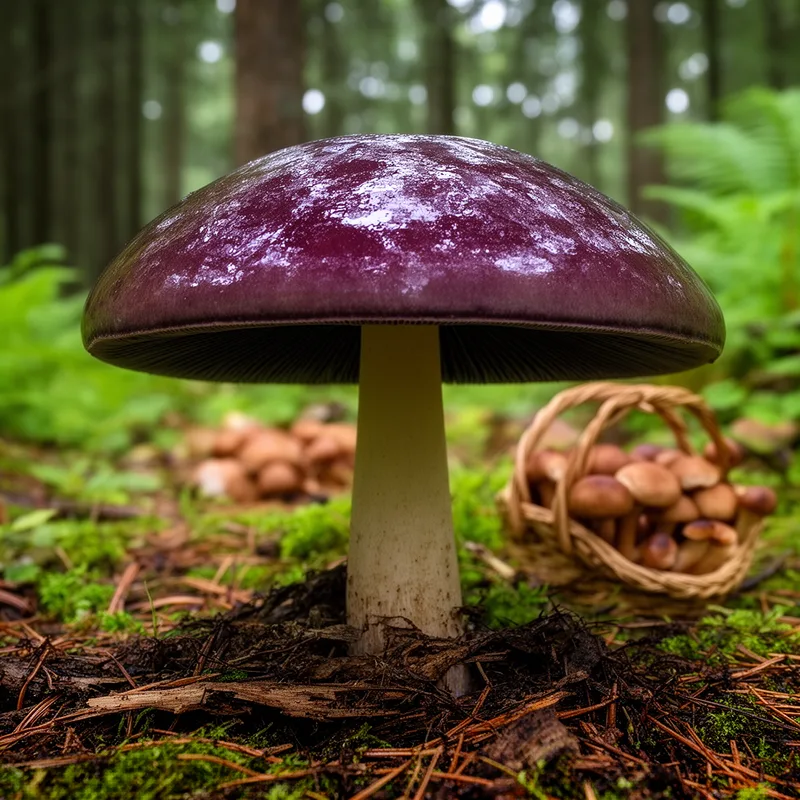
Stropharia hornemannii
- noun
- Specialized
- Mycology students identified the large, slimy-capped mushroom as Stropharia hornemannii during their field trip.
Examples
-
During our hike, we spotted a Stropharia hornemannii with its distinctive purple cap and long stalk near the stream.
-
The forest floor was dotted with several Stropharia hornemannii, their caps shining in the damp shade.
-
It's important not to confuse Stropharia hornemannii with similar-looking edible fungi, as it is considered inedible.
-
The Stropharia hornemannii is often found in damp, wooded areas.
-
Look at that Stropharia hornemannii growing near the tree!
-
The mycologist explained that Stropharia hornemannii can be found in rich, damp soil under trees in the forest.
-
In his study of fungi, he noted that Stropharia hornemannii has a slimy texture, making it easy to recognize.
Surface Forms
Morphology
Stropharia + hornemannii
This is a Latin taxonomic binomial rather than a compositional English phrase: 'Stropharia' is a technical genus name and 'hornemannii' is a species epithet (a proper name) with no lexical meaning in general English. A B1 learner who knows the constituent strings would not be able to derive the descriptive mushroom features from these Latinized names, so the expression is not transparently interpretable.
Etymology
Stropharia hornemannii may come from an old Greek word meaning 'turn' or 'belt', which points to the mushroom's ring on the stalk, and the second part, hornemannii, is 'named after' the botanist Hornemann. So the full name helps you remember a ringed mushroom and the person it honours.

