

Stropharia
- noun
- /strəˈfɛəriə/
- Specialized
- Several species within the Stropharia genus are commonly found in wooded areas throughout the spring.
Examples
-
The vibrant cap of the Stropharia mushroom makes it popular among foragers and mycologists.
-
The biologist identified the mushroom as a member of the Stropharia genus due to its distinctive ring.
-
The Stropharia mushroom is often found in wooded areas.
-
Have you ever seen a Stropharia in the wild?
-
You can grow the fascinating and delicate-tasting Stropharia (Stropharia rugoso-annulata) right in your garden, just like a regular food crop.
-
He recently held a public workshop on how growing Stropharia mushrooms in hardwood chip beds or mulch can prevent colony collapse.
-
Also known as king Stropharia, garden giants, and several other folk names, these edibles grow on many types of decaying organic matter, from garden soil to piles of wood chips and even compost heaps.
Synonyms

A group of mushrooms with brown spores
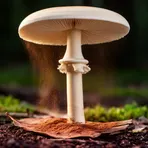
A mushroom with gills and a ring on its stem that makes brown spores
Compounds

- Specialized
A mushroom with gills, a long stalk, and a slimy yellow cap whose gills turn white to dark brown

- Specialized
A large inedible mushroom with a slimy purple or olive cap and dark gills

- Specialized
A large edible mushroom with a wide dark brown cap, thick stalk, and gills that turn brown as it ages
Surface Forms
Etymology
The word Stropharia comes from the Greek root stroph- meaning 'turn' or 'twist'. A helpful way to remember it is that many of these mushrooms have a ring or a turned part on the stem or cap, so Stropharia points to that twisted or turned feature.

