
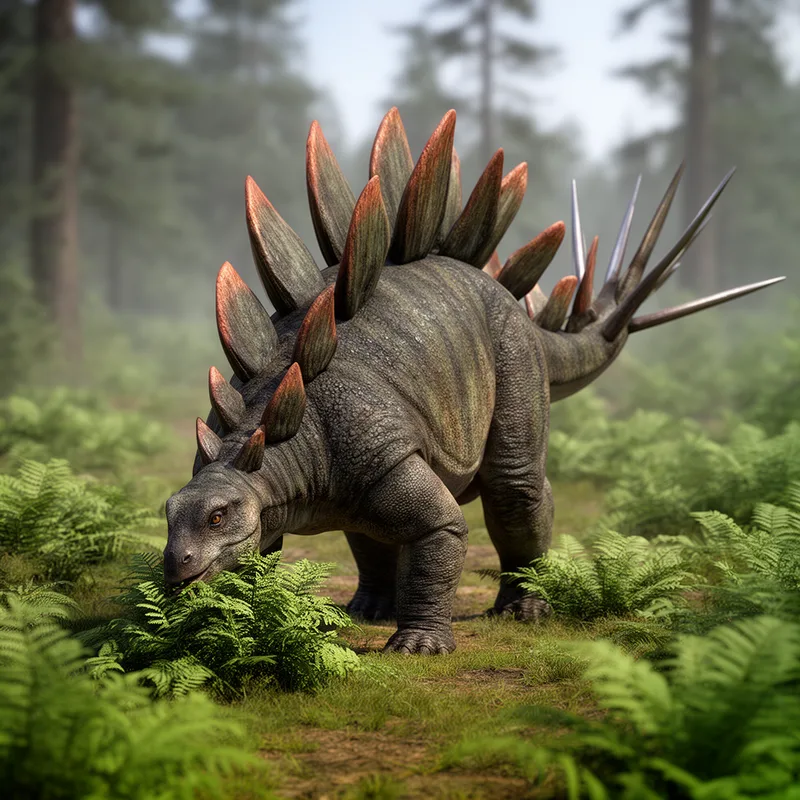
Stegosaurus stenops
- noun
- /ˌstɛɡəˈsɔrəs ˈstɛnɒps/
- Specialized
- The Stegosaurus stenops had large, upright plates running along its back and a powerful spiked tail.
Examples
-
Paleontologists discovered a well-preserved Stegosaurus stenops fossil in North America.
-
Children are often fascinated by the appearance of Stegosaurus stenops in dinosaur exhibitions.
-
The Stegosaurus stenops roamed the Earth millions of years ago.
-
Did you know that the Stegosaurus stenops had bony plates on its back?
-
Paleontologists discovered a well-preserved Stegosaurus stenops fossil in North America.
-
The Stegosaurus stenops had large, upright plates running along its back and a powerful spiked tail.
-
Children are often fascinated by the appearance of Stegosaurus stenops in dinosaur exhibitions.
Surface Forms
Morphology
Stegosaurus + stenops
This is a Linnaean binomial combining a known genus name 'Stegosaurus' with a specific epithet; a learner who knows 'Stegosaurus' will transparently understand it refers to a particular kind of Stegosaurus. However, the second element 'stenops' is not transparent to a B1 learner (it is a specialized Latin/Greek epithet and does not convey its descriptive sense without etymological knowledge), so the full, specific meaning cannot be derived from the parts.
Etymology
Stegosaurus stenops comes from old Greek words and means 'roof lizard' plus 'narrow face', with stegos ('roof'), saurus ('lizard') and stenops ('narrow face'). Scientists gave this name because of the big plates along its back that look like a roof and its narrower head, so the name helps you picture this plated, plant-eating dinosaur.

