

Stachys sylvatica
- noun
- Specialized
 :
Stachys sylvatica
:
Stachys sylvatica
- The leaves of Stachys sylvatica give off a strong, unpleasant odor when crushed.
Examples
-
Stachys sylvatica is often found growing in damp woodlands across Europe.
-
Gardeners sometimes cultivate Stachys sylvatica for its medicinal properties and ornamental value.
-
The Stachys sylvatica plant is often found in damp woodlands.
-
Many gardeners appreciate Stachys sylvatica for its hardiness.
-
The leaves of Stachys sylvatica give off a strong, unpleasant odor when crushed.
-
Stachys sylvatica is often found growing in damp woodlands across Europe.
-
Gardeners sometimes cultivate Stachys sylvatica for its medicinal properties.
Synonyms
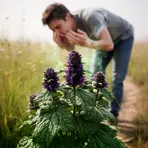
A small herb with wrinkled leaves, dark purple flowers and a strong unpleasant smell

A European herb with wrinkled leaves that smells very bad

A plant that lives for many years and spreads by underground stems in wet or shady places
Surface Forms
Morphology
Stachys + sylvatica
This is a scientific Latin binomial rather than a compositional English phrase: one constituent ('sylvatica') is not an English word in the provided data and the name encodes taxonomic/habitat information that B1 learners will not reliably decode. Even knowing 'Stachys' as a plant genus would not let a learner infer the specific meaning 'foul-smelling perennial herb native to Eurasia' from the parts. Therefore the overall meaning is not derivable from the constituents for an average B1 learner.
Etymology
Stachys sylvatica comes from the Greek word stachys meaning 'ear of grain' because its flowers grow in a long spike, and the Latin word sylvatica means 'of the woods'. So the name helps you remember it is a plant with spike flowers that grows in woods and is often called 'hedge woundwort'.

