
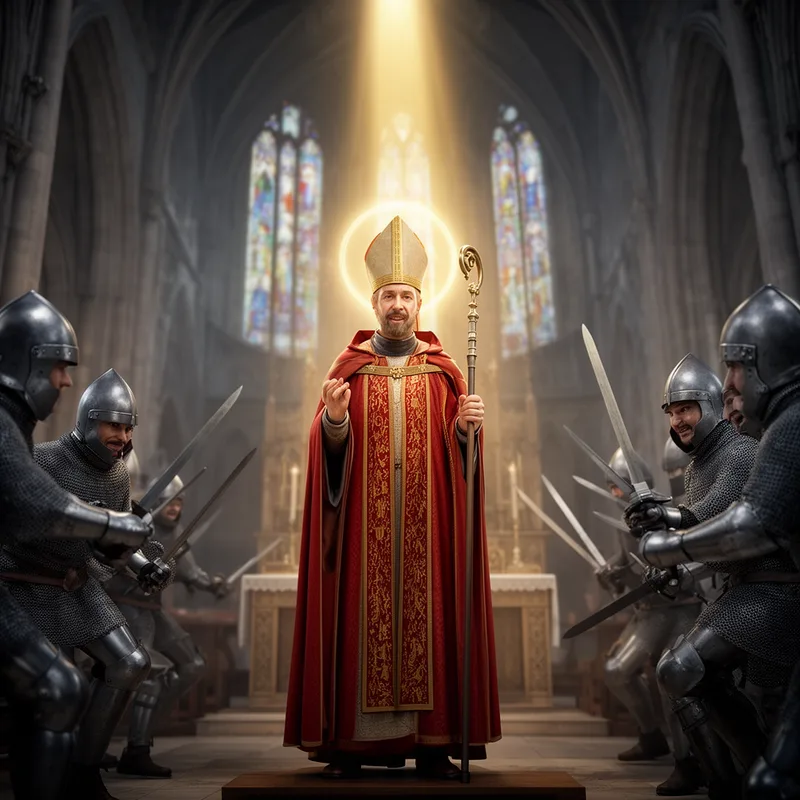
St. Thomas a Becket
- proper noun
- The murder of St. Thomas a Becket had a profound effect on the relationship between church and state in England.
Examples
-
Many pilgrims visited the shrine of St. Thomas a Becket at Canterbury Cathedral during the Middle Ages.
-
Did you know that St. Thomas a Becket was murdered in 1170?
-
Historians still debate the motivations behind King Henry II's conflict with St. Thomas a Becket.
-
Many pilgrims visit the shrine of St. Thomas a Becket in Canterbury.
-
Historians still debate the motivations behind King Henry II's conflict with St. Thomas a Becket.
-
The murder of St. Thomas a Becket had a profound effect on the relationship between church and state in England.
-
Many pilgrims visited the shrine of St. Thomas a Becket at Canterbury Cathedral during the Middle Ages.
Synonyms
 1
9.0

An English church leader who became archbishop of Canterbury and was killed after opposing King Henry II

 1
7.8
A senior church leader in England who was killed after arguing with King Henry II about the Church's rights
A church leader in England who opposes the king and later becomes a saint
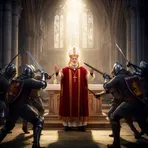
A senior church leader in Canterbury remembered as a saint for being killed defending the Church against the king
Surface Forms
Morphology
St. + Thomas + a + Becket
This is a proper name: a B1 learner who knows 'St.' = saint and recognizes 'Thomas Becket' can infer it refers to a saintly person named Thomas Becket, so part of the meaning (that it is a saint's name) is transparent. However, the detailed historical/biographical sense (Archbishop of Canterbury, murdered after opposing the king, venerated as a martyr) is encyclopedic and cannot be derived from the constituent words, and the item 'a' is part of the proper name rather than a predictable article, so full meaning is not recoverable from the parts.
Etymology
St. Thomas a Becket was Thomas Becket, a 12th-century Archbishop of Canterbury who was killed in his cathedral after he stood up to King Henry II. People believed he had 'died for the church' and called him a 'saint', so many pilgrims visited his shrine and his name is still used today.