
Sporobolus cryptandrus
- noun
- Specialized
 :
Sporobolus cryptandrus
:
Sporobolus cryptandrus
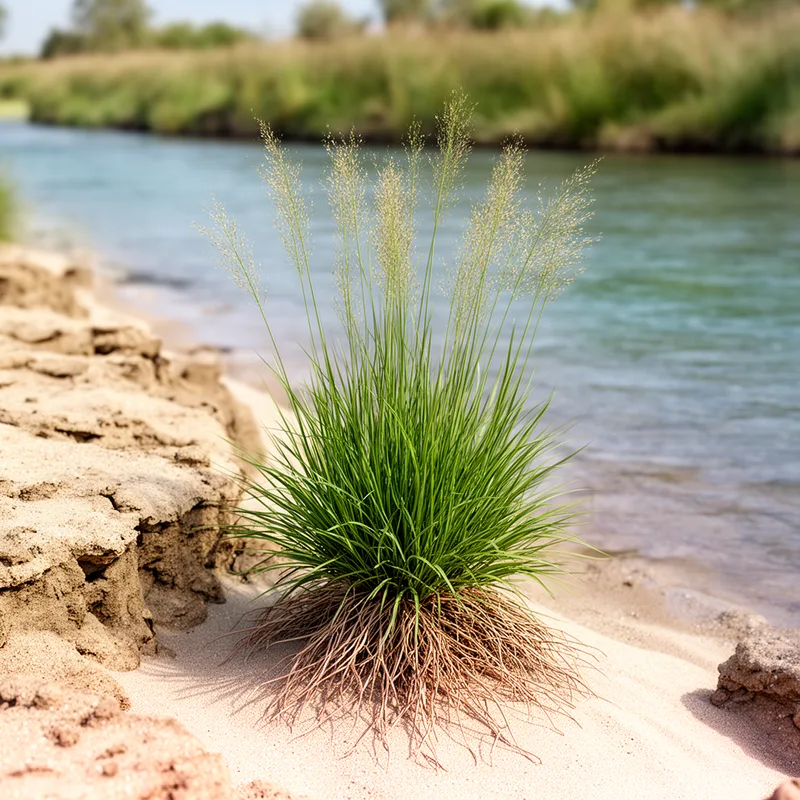
- Sporobolus cryptandrus grows abundantly in the sandy fields of eastern North America.
Examples
-
Botanists have studied the drought resistance of Sporobolus cryptandrus in prairie restoration projects.
-
Sporobolus cryptandrus is often found stabilizing sandy soils along riverbanks.
-
Sporobolus cryptandrus is also called sand dropseed because of its characteristic seed dispersal.
-
The Sporobolus cryptandrus thrives in sandy soils.
-
Have you seen the Sporobolus cryptandrus in the park?
-
In the fall, the seeds of Sporobolus cryptandrus scatter across the dunes.
-
Gardening enthusiasts appreciate Sporobolus cryptandrus for its ability to thrive in dry, sandy conditions.
Synonyms

A smooth grass that grows in sandy places in eastern North America
Surface Forms
Morphology
Sporobolus + cryptandrus
This is a Latin scientific name: the genus 'Sporobolus' signals a type of grass but the species epithet 'cryptandrus' is not an English lexical item and provides no transparent, compositional meaning to a B1 learner. Scientific binomials function as proper names rather than semantically predictable phrases, so the full sense ('sand dropseed, a specific grass species') cannot be derived from the constituents.
Etymology
Sporobolus cryptandrus is often called 'sand dropseed' because its loose seed heads let tiny seeds drop straight into the sand and be carried by the wind. That's why the name fits: it is a grass that spreads in sandy places and helps hold the soil.

