
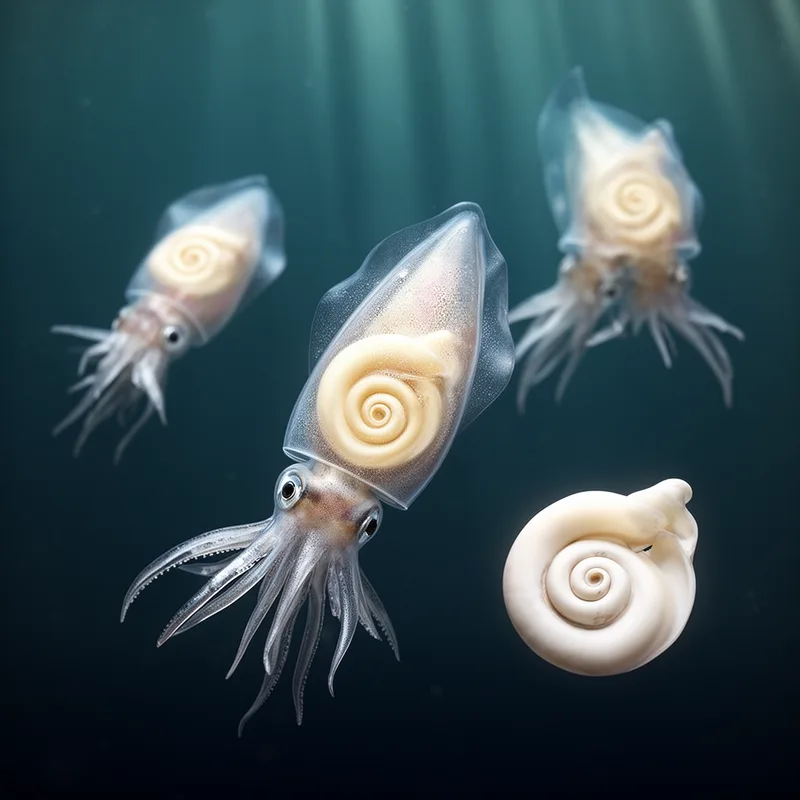
Spirulidae
- noun
- /ˌspɪrʊˈleɪdi/
- Specialized
- The Spirulidae are known for their internal coiled shells, often called ram's horns.
Examples
-
Only one living species of Spirulidae, Spirula spirula, is recognized today.
-
The Spirulidae family includes unique species like the ram's horn squid.
-
Scientists have studied Spirulidae fossils to understand cephalopod evolution.
-
Many researchers study the Spirulidae for their fascinating biology.
-
The Spirulidae family includes species like the ram's horn squid, which is recognized for its distinct shell shape.
-
Scientists believe that studying Spirulidae can provide insights into the evolutionary history of cephalopods.
-
Only one species of Spirulidae, known as Spirula spirula, is still alive today, showcasing a unique adaptation to its environment.
Synonyms


 1
9.9
A small deep sea animal like a squid with a coiled internal shell
Sea animals like squid that have a small coiled shell inside their body
Compounds
- Specialized
Sea animals like squid that have a small coiled shell inside their body
Surface Forms
Morphology
Spirulidae = Spirula (semi-transparent) = Spirula + idae
Formed from the genus name 'Spirula' plus the zoological family suffix '-idae'; clear for those familiar with taxonomy but specialized for general learners.
Etymology
The word Spirulidae comes from the genus Spirula and the family ending -idae. The name Spirula comes from a root meaning 'coil' or 'spiral', like the English word spiral, so Spirulidae are the family of squids with a small coiled shell.