
Spirochaetales
- noun
- /ˌspaɪrəˈkiːtəlz/
- Specialized
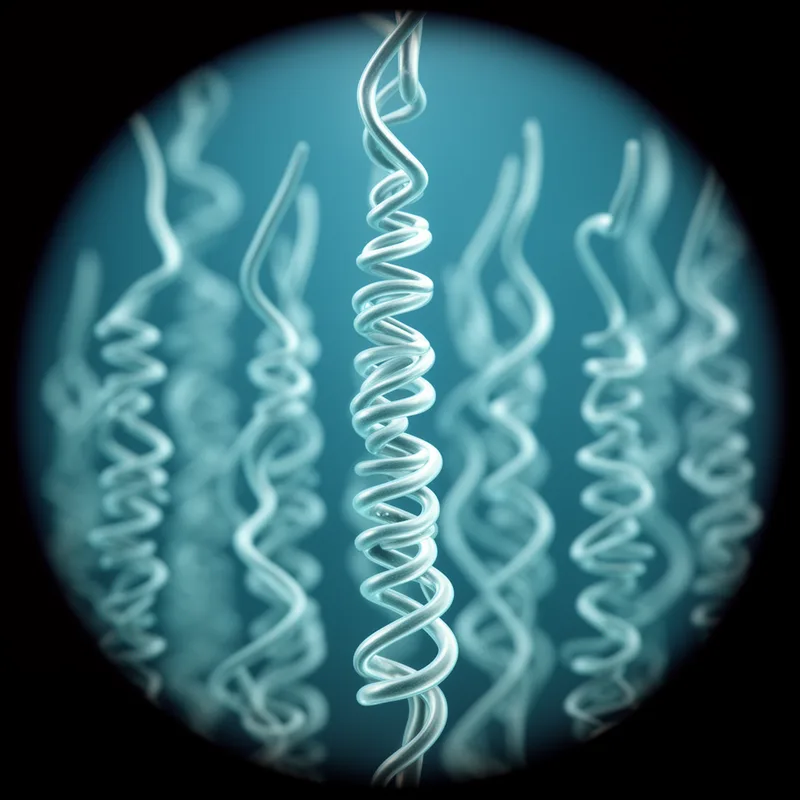
- Under a microscope, members of the Spirochaetales are recognizable by their flexible, spiral shape.
Examples
-
The Spirochaetales include bacteria responsible for diseases such as syphilis and Lyme disease.
-
Did you know that Spirochaetales can be found in many environments?
-
Several important human pathogens belong to the order Spirochaetales.
-
The Spirochaetales are known for their unique spiral shape.
-
Several important human pathogens belong to the order Spirochaetales.
-
The Spirochaetales include bacteria responsible for diseases such as syphilis and Lyme disease.
-
Under a microscope, members of the Spirochaetales are recognizable by their flexible, spiral shape.
Synonyms

A group of thin spiral bacteria, some of which cause diseases like Lyme and syphilis
Compounds
- Specialized
A group of thin spiral bacteria, some of which cause diseases like Lyme and syphilis
Surface Forms
Morphology
Spirochaetales = Spirochaeta (opaque) = spirochaeta + ales
This is a specialist taxonomic formation (genus name + '-ales') and the scientific suffix and base are unlikely to be interpretable by an average learner.
Etymology
The word Spirochaetales comes from parts meaning spiro- 'to coil' and chaete 'hair'. So it describes thin, hair-like bacteria twisted into spirals, and the ending -ales shows it is a group or order of bacteria.

