
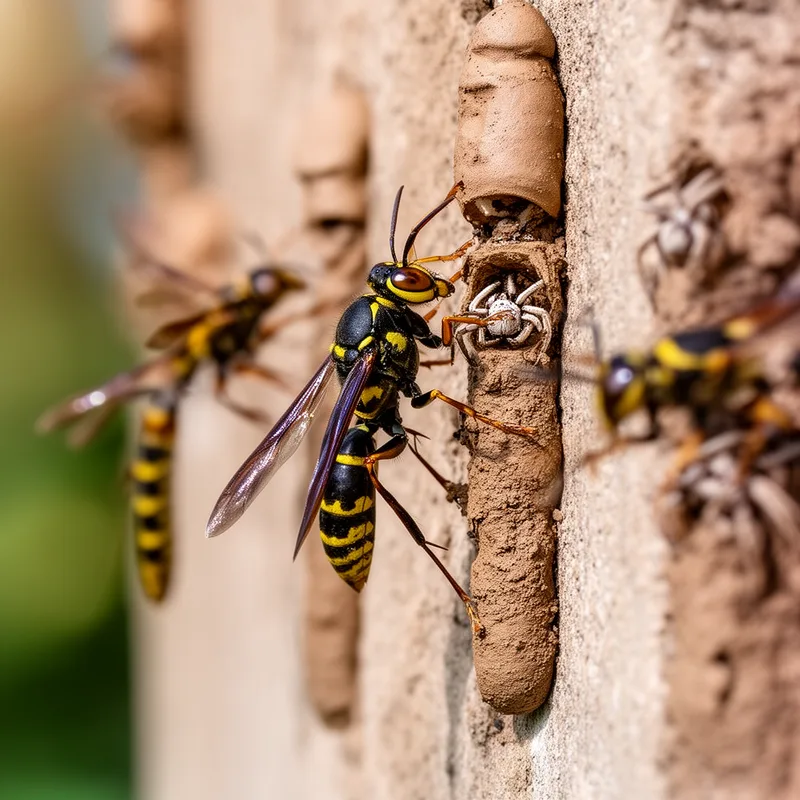
Sphecidae
- noun
- /ˈsfidʒɪˌdeɪ/
- Specialized
- Several species within the Sphecidae family prey on spiders to feed their larvae.
Examples
-
Sphecidae are commonly known as mud daubers due to their habit of building mud nests.
-
Entomologists study Sphecidae to understand their solitary behaviors and ecological role.
-
The Sphecidae family includes many species of wasps.
-
Did you know that Sphecidae are also called mud daubers?
-
The Sphecidae family includes various wasps that construct nests out of mud.
-
Farmers often notice Sphecidae wasps diligently building their solitary nests in the garden.
-
The Sphecidae are fascinating insects because of their unique nesting behaviors.
Synonyms

A wasp that lives alone, digs a nest in soil and brings stung insects for its young to eat

A wasp that makes a nest from mud and keeps spiders to feed its young
Surface Forms
Etymology
The word Sphecidae comes from the Greek word sphex, which means 'wasp', and the scientific ending -idae, which means 'family'. So Sphecidae simply means the 'wasp family', a name that fits groups like mud daubers and digger wasps that build solitary nests.

