
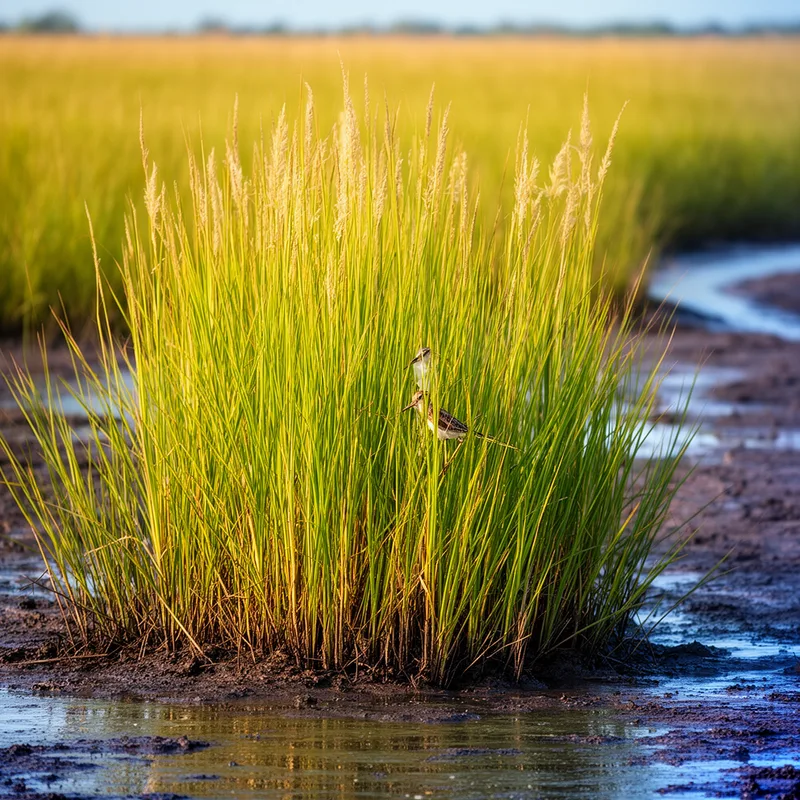
Spartina cynosuroides
- noun
- Specialized
- Birds nest among the dense stands of Spartina cynosuroides in the summer.
Examples
-
Spartina cynosuroides thrives in coastal marshes.
-
Ecologists study communities where Spartina cynosuroides dominates the landscape.
-
Spartina cynosuroides is often found along the brackish edges of tidal marshes.
-
The Spartina cynosuroides is essential for local ecosystems.
-
Spartina cynosuroides is often found along the brackish edges of tidal marshes.
-
Birds nest among the dense stands of Spartina cynosuroides in the summer.
-
Ecologists study communities where Spartina cynosuroides dominates the landscape.
Synonyms


 1
8.9
1
8.9
A tall grass that grows in coastal marshes and helps stop erosion

A tall plant like a reed that grows in salty marshes and meadows

A group of grasses that grow in freshwater swamps and salt marshes
Surface Forms
Morphology
Spartina + cynosuroides
This is a Latin binomial (genus + specific epithet) used as a scientific name; knowing 'Spartina' as a genus may tell a learner it is a grass, but the epithet 'cynosuroides' is a non‑transparent, specialized morphological/etymological element not found in learner vocabulary. The overall referent (a particular species of tall, reed‑like grass) cannot be reliably derived by a B1 learner from the constituent parts, so the expression is opaque.
Etymology
Spartina cynosuroides may come from old words meaning a 'dog's tail' because cynosuroides describes the plant's long, thin flower spikes. So the name fits a tall, reed-like grass that grows in salt meadows and coastal marshes.