

Spanish bayonet
- noun
- /ˈspænɪʃ ˈbeɪənɛt/
- US
- She planted a Spanish bayonet near the fence for its sharp leaves as a natural barrier.
Examples
-
The Spanish bayonet is known for its sharp leaves.
-
The Spanish bayonet thrives in dry, sandy soils across the southwestern deserts.
-
Gardeners admire the Spanish bayonet for its striking appearance and resilience to drought.
-
Many gardeners appreciate the Spanish bayonet for its beauty.
-
The Spanish bayonet is known for its sharp, pointed leaves that can be quite dangerous if touched.
-
In the desert landscape, the Spanish bayonet thrives with its clusters of white flowers blooming in the spring.
-
Many gardeners appreciate the Spanish bayonet for its unique appearance and ability to tolerate drought.
Synonyms

A plant with long pointed leaves like swords and clusters of white flowers

A garden plant with long stiff leaves with sharp tips and white flowers
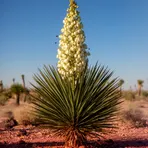
A tree-like plant with long sword-shaped leaves and tall white flower spikes from the southwestern US and northern Mexico
Surface Forms
Morphology
Spanish + bayonet
The compound is partially predictable: 'Spanish' suggests origin or association and 'bayonet' evokes a long, pointed blade, so a B1 learner who knows both words can infer a plant with sharp, pointed leaves. However, the specific reference to a yucca species and the conventionalized plant name are not fully derivable from the parts alone, making the relation metaphorical rather than strictly compositional.
Etymology
Spanish bayonet comes from the plant's long, stiff leaves that end in a very sharp point like a soldier's bayonet. That's why the name is used for a yucca with very sharp leaves.

