
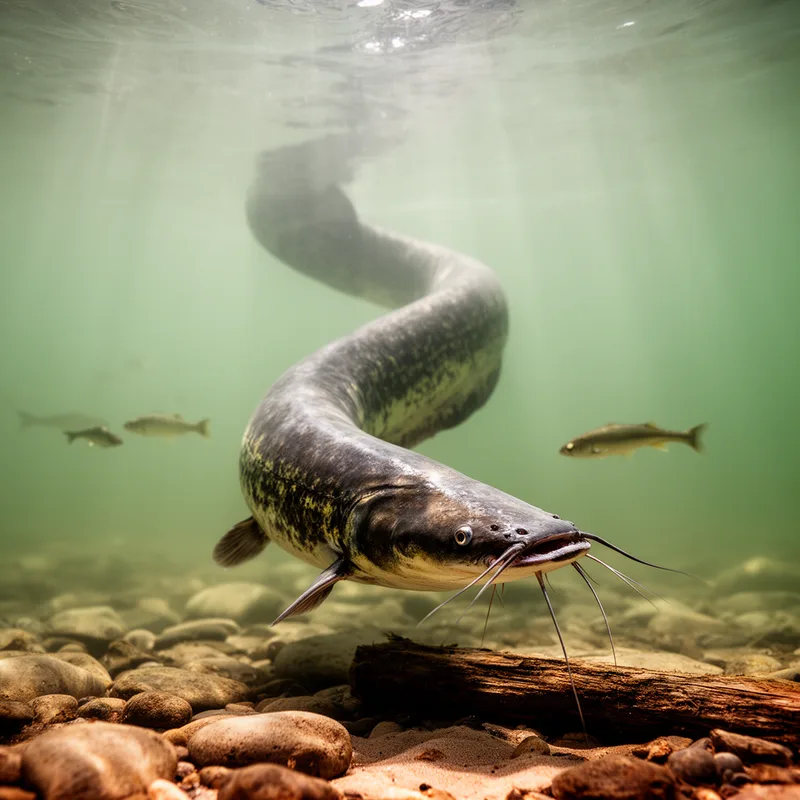
Silurus glanis
- noun
- Specialized
 :
Silurus glanis
:
Silurus glanis
- The Silurus glanis can grow to lengths of more than two meters.
Examples
-
Researchers are studying the habits of the Silurus glanis to understand its impact on local ecosystems.
-
Many anglers dream of catching a Silurus glanis in the river.
-
Fishermen in the Danube river are known for catching enormous Silurus glanis.
-
The Silurus glanis can grow up to three meters long.
-
Fishermen in the Danube River often catch large Silurus glanis, which can weigh over 100 kilograms.
-
The Silurus glanis is known for its elongated body and can be found in many rivers across central and eastern Europe.
-
Anglers frequently seek out the Silurus glanis due to its impressive size and fighting ability when caught.
Synonyms

A very large freshwater catfish found in European rivers like the Danube

A very large freshwater fish from European rivers that can grow over two meters
Surface Forms
Morphology
Silurus + glanis
This is a Linnaean binomial (genus + species). A learner who knows 'Silurus' as a genus of catfishes and recognizes the binomial pattern will infer it names a particular species of Silurus (i.e., a type of catfish), but they will not be able to derive specific attributes like its large size or native range from the constituents, and 'glanis' has no ordinary English meaning. Because the naming convention gives partial, systematic information but not the descriptive meaning, it is only partially transparent to learners.
Etymology
Silurus glanis may come from old words for 'cat', and the parts Silurus and glanis point to that. People gave the fish this name because it has long whiskers and hunts quietly at night like a cat. That's why the scientific name helps you remember it is a big European 'catfish'.

