
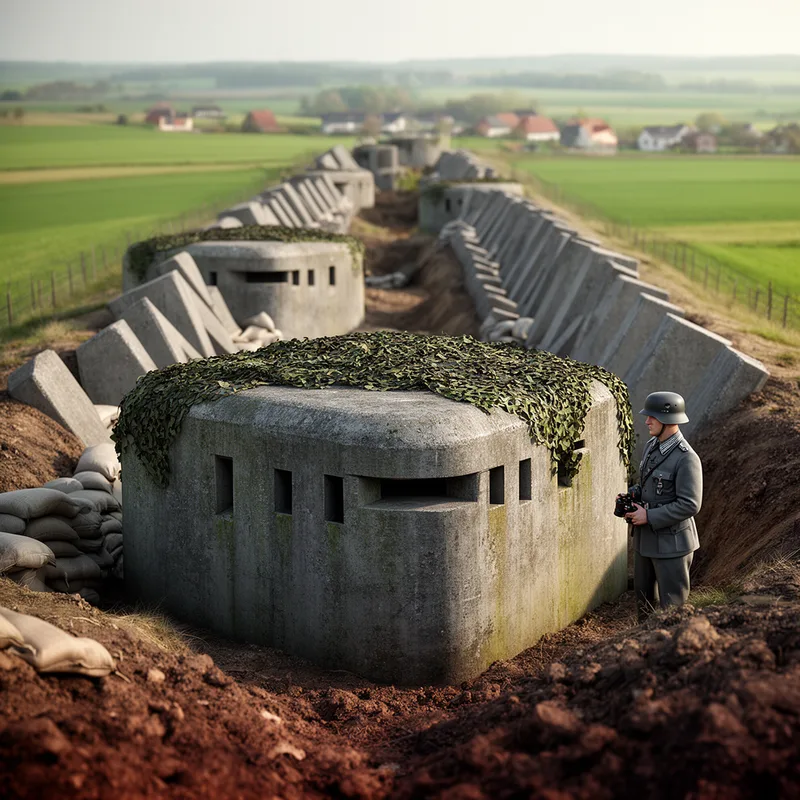
Siegfried Line
- proper noun
- The Siegfried Line was established by Germany as a defense against Allied attacks from France.
Examples
-
Historians often compare the Siegfried Line with its French counterpart, the Maginot Line.
-
Remnants of the Siegfried Line can still be seen along the German border today.
-
The Allied forces faced fierce resistance when they attacked the Siegfried Line in late 1944.
-
The Siegfried Line was a significant defensive structure during World War II.
-
Many historians study the Siegfried Line to understand German military strategy.
-
During World War II, American forces launched a major offensive against the Siegfried Line along the German border.
-
As troops advanced, they faced intense resistance while crossing the fortified Siegfried Line in their campaign.
Surface Forms
Morphology
Siegfried + line
Partly transparent: a B1 learner who knows 'line' (used for defensive/fortification contexts) and recognizes 'Siegfried' as a proper name can infer this is a defensive line named 'Siegfried'. However, the specific historical and national details (that it was a German WW2 fortification opposite the Maginot Line) are not derivable from the words alone and require cultural/historical knowledge, so the expression is not fully transparent.
Etymology
The name Siegfried Line may come from the legendary hero Siegfried, a strong fighter in old German stories, and people used his name to give the forts a heroic image. Calling the border forts a Line like a hero's guard makes a clear picture and explains why the phrase means a long set of German border 'defenses' built before and during World War II.

