
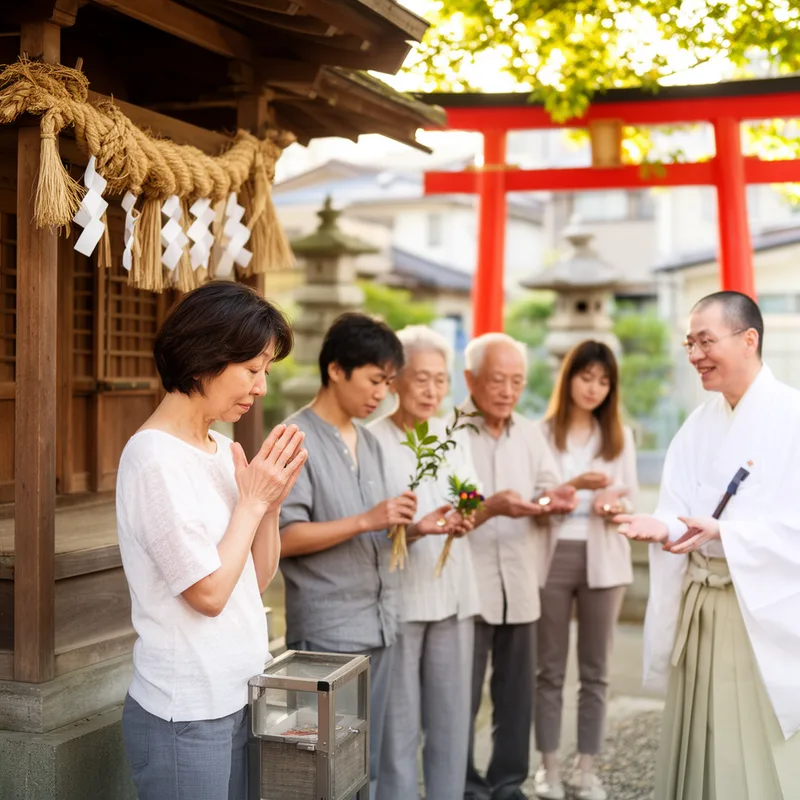
Shuha Shinto
- noun
- Specialized
- Practices within Shuha Shinto often emphasize personal faith and local traditions.
Examples
-
Religious festivals in Japan can be influenced by various branches, including Shuha Shinto.
-
Many scholars have studied the differences between Shuha Shinto and Kokka Shinto.
-
Many practitioners follow Shuha Shinto for its diverse rituals.
-
The Shuha Shinto sect emphasizes local deities.
-
Many scholars have studied the differences between Shuha Shinto and other sects in Japan.
-
Practices within Shuha Shinto often emphasize the importance of local deities and rituals.
-
Religious festivals in Japan often reflect the beliefs and practices of Shuha Shinto traditions.
Surface Forms
Morphology
The phrase is a straightforward modifier + noun composition: 'Shuha' specifies the sectarian/non-state type and 'Shinto' names the religion, so the combined meaning ('Shinto sects other than State Shinto') is directly derivable from the parts. Although culturally specific, the semantic relation follows normal compositional patterns and would be predictable to learners who know both constituents.
Etymology
Shuha Shinto comes from Japanese parts Shu and ha, which mean 'school' or 'branch', so the name pictures different local or religious groups of Shinto. That's why it refers to Shinto groups that are not the official 'State Shinto'.

