

Sheol
 1
9.9
1
9.9

- noun
- /ˈʃiːoʊl/
- Literature
- In ancient beliefs, Sheol was seen as a dark place where souls awaited judgment.
Loading YouTube…
Watch on YouTubeIf I make my bed in the depths of the Sheol, you are there.
- If I make my bed in the depths of the Sheol, you are there.
Examples
-
The poet described Sheol as a shadowy abode, separating the living from the departed.
-
Soon enough we must all go down to Sheol.
-
If I make my bed in Sheol, you are there!
Blog text (16) -
O LORD, you have brought up my soul from Sheol; you restored me to life from among those who go down to the pit.
Blog text (27) -
David talked of not being able to praise Yah from Sheol.
Blog text (23) -
All his sons and all his daughters rose up to comfort him, but he refused to be comforted and said, "No, I shall go down to Sheol to my son, mourning."
Blog text (23) -
The Hebrews thought that Sheol was a pit deep under the earth (cf. Deut 32:22) where the righteous and unrighteous went after death - a "land of forgetfulness."
Blog text (14) -
Even the bravest warriors fear going down to Sheol, for it is the realm of the dead.
Synonyms
 581
2.1
581
2.1
A place after death where the dead are punished in some religions
 51
7.2
51
7.2
A place where souls go after death in myths
 10
8.8
10
8.8
A dark world below the earth where the dead live


 1
9.9
1
9.9
A place of suffering for the dead in religious stories
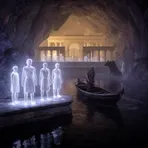
The place of the dead in Greek myths where souls go after death
Surface Forms
Etymology
Sheol comes from ancient Hebrew and originally meant a 'pit' or 'place of the dead', a deep, dark grave where people thought souls went. So in the Bible it refers to the underworld or the place where souls go after death.