
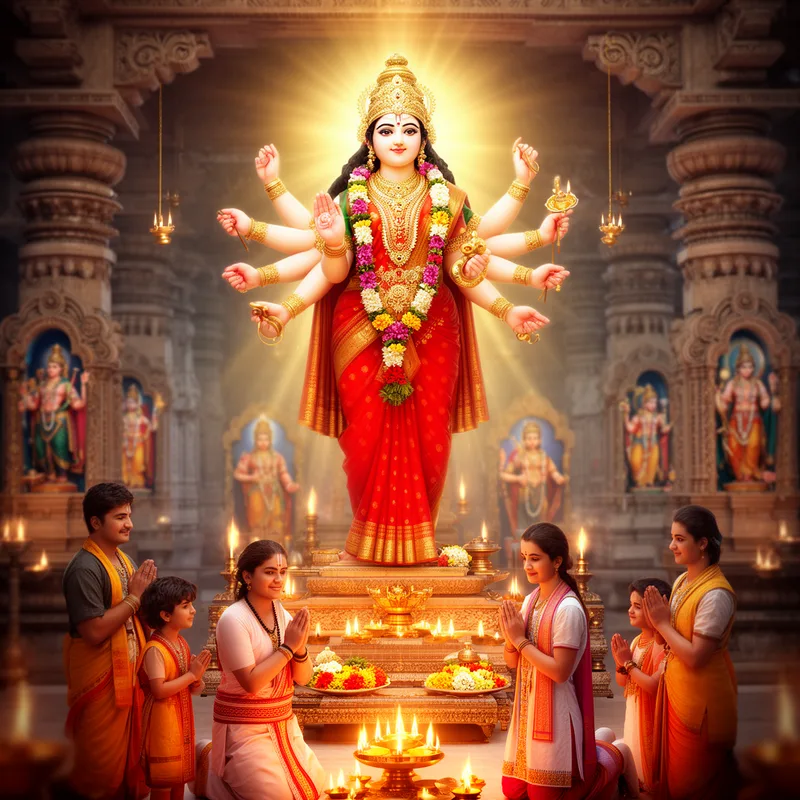
Shaktism
- noun
- /ˈʃɑːktɪzəm/
- Shaktism emphasizes the worship of the Divine Mother as the source of all power and creation.
Examples
-
The main temples of Shaktism are dedicated to various forms of the goddess Shakti.
-
Shaktism is a major tradition within Hinduism that emphasizes the worship of the goddess Shakti as the supreme deity.
-
Her family follows Shaktism and celebrates traditional festivals honoring the goddess.
-
Many devotees practice Shaktism with great devotion.
-
Is Shaktism the same as Shinto?
-
Many followers of Shaktism participate in rituals that honor the Divine Mother's power and grace.
-
In Shaktism, practitioners believe that Shakti is the divine energy that manifests in various forms.
Synonyms
A Hindu tradition that worships the goddess Shakti as the feminine divine power
Surface Forms
Morphology
Shaktism = Shakti (transparent) = Shakti + ism
Formed by the deity name 'Shakti' plus the productive English suffix '-ism' meaning 'doctrine, system, or religious tradition'; the relation is straightforward.
Etymology
Shaktism comes from the Sanskrit name Shakti, which means 'power' or 'energy', and the ending -ism, which means 'a belief' or 'a system'. So Shaktism is the Hindu tradition that worships the goddess Shakti as the highest power.

