
Shakti
 2
9.9
2
9.9

- noun
- /ˈʃʌkti/
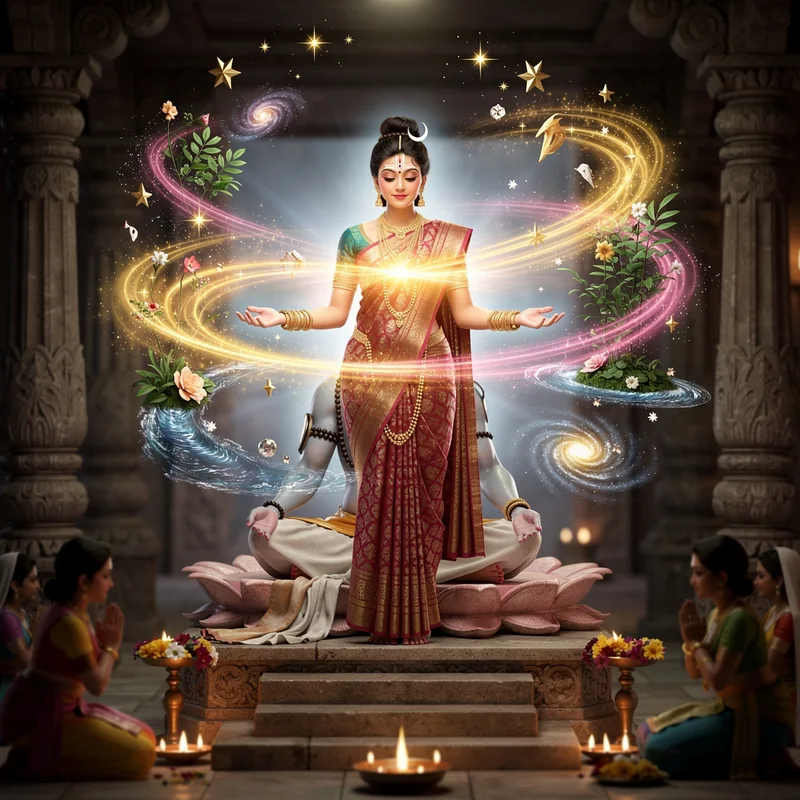
- For example, Hinduism personifies divine strength and power in the form of a female figure referred to as Shakti.
- Shakti in Grameen
Loading YouTube…
Watch on YouTubeTantra, on the other hand, taught that women could achieve rapid enlightenment because they were natural embodiments of Shakti.
- Tantra, on the other hand, taught that women could achieve rapid enlightenment because they were natural embodiments of Shakti.
Examples
-
It presented a new worldview which saw all material reality as animated by Shakti, divine feminine power.
-
Without the power of Kali/Shakti, the great god Shiva is inert.
Blog text (1) -
To understand how to gain shakti from situations, people, and things requires time and training.
Blog text (30) -
The blue is the shakti, the energy in the spine.
-
We lose that quality which is the essence of youth and vigor... shakti.
Blog text (30) -
This is an impressive representation of Shiva and Shakti.
-
In tantric philosophy, the female represents shakti, energy, matter, while the male is the embodiment of consciousness.
Blog text (30) -
For example, Shiva, the male destroyer, requires power and energy from Shakti, the female provider of power, to carry out his godly duties.
Academic text (2004) -
Kundalini, located at the base of the spine, is awakened and manifests itself as the great goddess Shakti, the power of spiritual transformation.
Academic text (1990) -
In Hinduism, Shakti is revered as the divine female energy that complements Shiva.
Synonyms

 1
9.9
1
9.9
A female divine power in Hinduism that people worship as a goddess and Shiva's partner
Surface Forms
Etymology
Shakti comes from the Sanskrit word shakti, which means 'power' or 'energy'. In Hindu belief, Shakti is the divine female energy or creative force, so the name reminds us that she is the power behind life and change.