
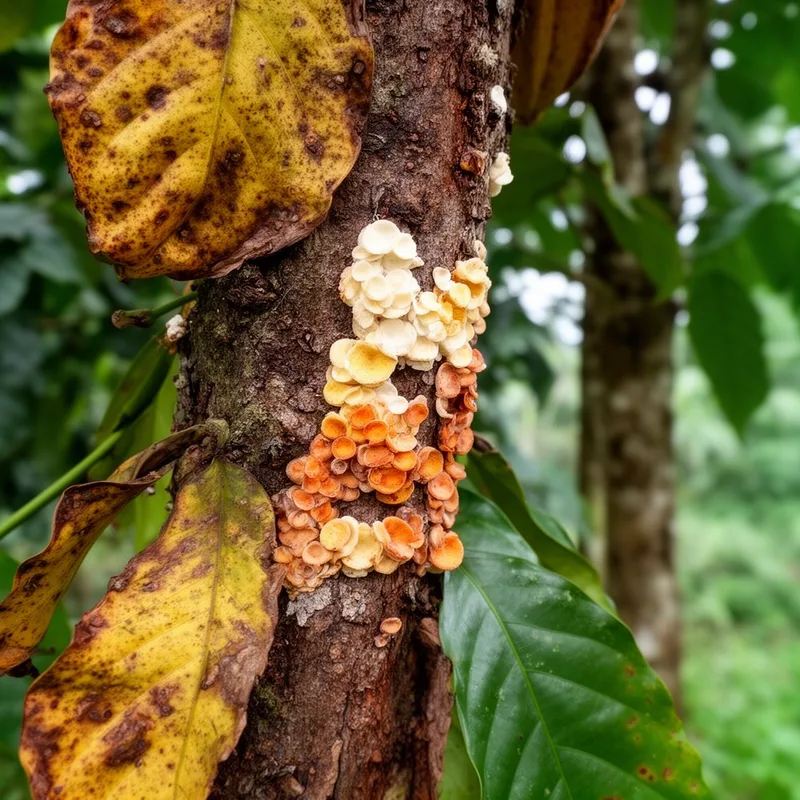
Septobasidiaceae
- noun
- /sɛpˌtoʊˌbæsɪˈdiːeɪˌsi/
- Specialized
- Members of the Septobasidiaceae are commonly found on the bark of tropical trees.
Examples
-
The unique life cycle of the Septobasidiaceae has attracted interest from mycologists worldwide.
-
Research has shown that Septobasidiaceae fungi can cause disease in economically important crops.
-
The Septobasidiaceae family includes several species that affect crops.
-
Researchers are studying the Septobasidiaceae to understand their impact on agriculture.
-
Members of the Septobasidiaceae are often found on the leaves of tropical plants, showcasing their parasitic nature.
-
Research has demonstrated that species from the Septobasidiaceae family can weaken various important agricultural crops.
-
The Septobasidiaceae fungi play a significant role in the ecosystem by parasitizing specific plant hosts in tropical regions.
Synonyms
A group of fungi that often live with scale insects
Surface Forms
Morphology
Septobasidiaceae = Septobasidium (opaque) = Septobasidium + aceae
The formation uses a specialized Latinized botanical family suffix (-aceae) and a scientific genus name, a pattern not transparent to average learners.
Etymology
Septobasidiaceae combines Septo- from Latin 'septum' meaning 'a wall or division', the root basidium from Greek 'basis' meaning 'a base or pedestal', and the family ending -aceae. So the name points to a family of fungi with divided cell walls and a special 'base' structure, and these fungi often live on plants and can cause disease.

