
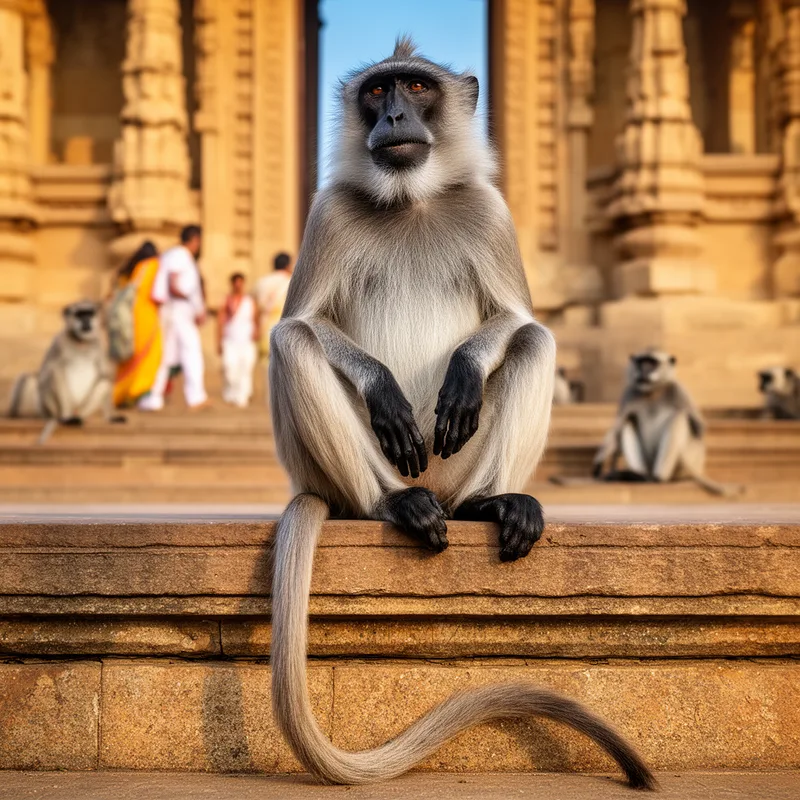
Semnopithecus entellus


 1
9.9
- noun
- Indian
- The Semnopithecus entellus is often seen near temples in northern India, where it is protected and revered.
Examples
-
The gray fur and long tail distinguish the Semnopithecus entellus from other primates in the region.
-
The Semnopithecus entellus is often seen in temples across India.
-
Researchers observed a troop of Semnopithecus entellus displaying complex social behavior in the wild.
-
Have you ever spotted a Semnopithecus entellus in the wild?
-
Researchers observed a troop of Semnopithecus entellus displaying complex social behavior in their natural habitat.
-
The Semnopithecus entellus is commonly found around sacred sites in India, where it is both protected and respected.
-
Local communities often admire the Semnopithecus entellus for its graceful movements and social structure.
Synonyms
 1
9.9
A large gray monkey from southern Asia often seen as sacred in India
A langur monkey from southern Asia often seen near temples and thought sacred

A type of monkey from southern Asia often seen near temples and considered holy in India
Surface Forms
Morphology
This is a Linnaean binomial composed of a genus and species name; if a learner knows both constituents as referring to monkeys/a monkey species, they can infer the compound denotes a particular monkey species. Scientific naming by combining genus + species is a transparent, compositional pattern common across languages and disciplines, so the meaning is directly derivable from the parts.
Etymology
Semnopithecus entellus may come from old Greek and a local name: semno- meaning 'sacred' and -pithecus meaning 'monkey', while entellus was a local name for these langurs. So the name paints a clear picture of a 'sacred monkey' often seen near temples, which helps explain why this species is protected and respected in parts of India.