
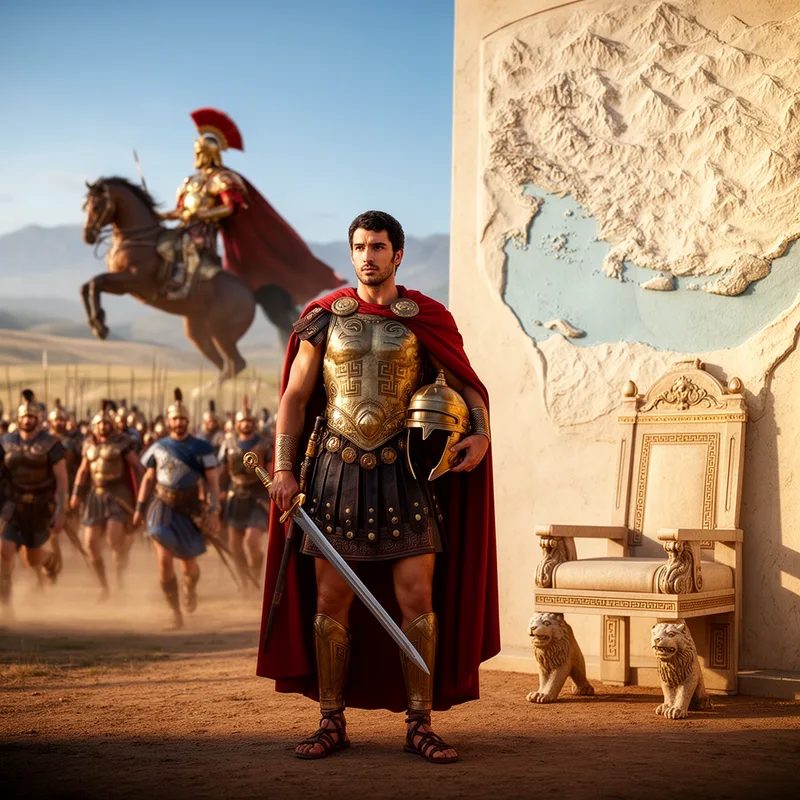
Seleucus


 1
9.9
- proper noun
- /səˈluːkəs/
- His empire extended from the Mediterranean to India. PHOTO (COLOR): A coin showing Alexander the Great in combat with Prince Porus of India, who is mounted on an elephant, c. 327 BC. PHOTO (COLOR): Seleucus Nicator of Syria, who imported military elephants from India.
Examples
-
For our purposes, only three of those really matter and on your handout you'll see the name Seleucus and Antiochus and the Seleucids.
-
In the third century B.C., Seleucus I Nicator ("the Victor"), one of Alexander the Great's commanders, established a settlement he called Seleucia, probably a katoikia, or military colony, on the western side of the river.
Blog text (22) -
Seleucus Nicator established an alliance with the Indian king Chandragupta Maurya and sent a Greek diplomat called Megasthenes to reside at the Mauryan court.
Academic text (2010) -
Seleucus Nicator founded the Seleucus dynasty after his campaigns in Asia.
-
After the death of Alexander the Great, Seleucus played a crucial role in the power struggle for control of his empire.
-
The Seleucus dynasty, established by him, ruled over much of Asia Minor until 65 BC.
Synonyms
 1
9.9
A Macedonian general who accompanied Alexander the Great into Asia and started the Seleucid family of kings
 1
9.9
A Macedonian general under Alexander the Great who started a ruling family in western Asia
Surface Forms
Etymology
Seleucus comes from the Greek name Seleukos, which probably means 'bright' or 'shining'. A helpful way to remember him is to think of a 'bright' general who founded the Seleucid Empire that was named after him.