
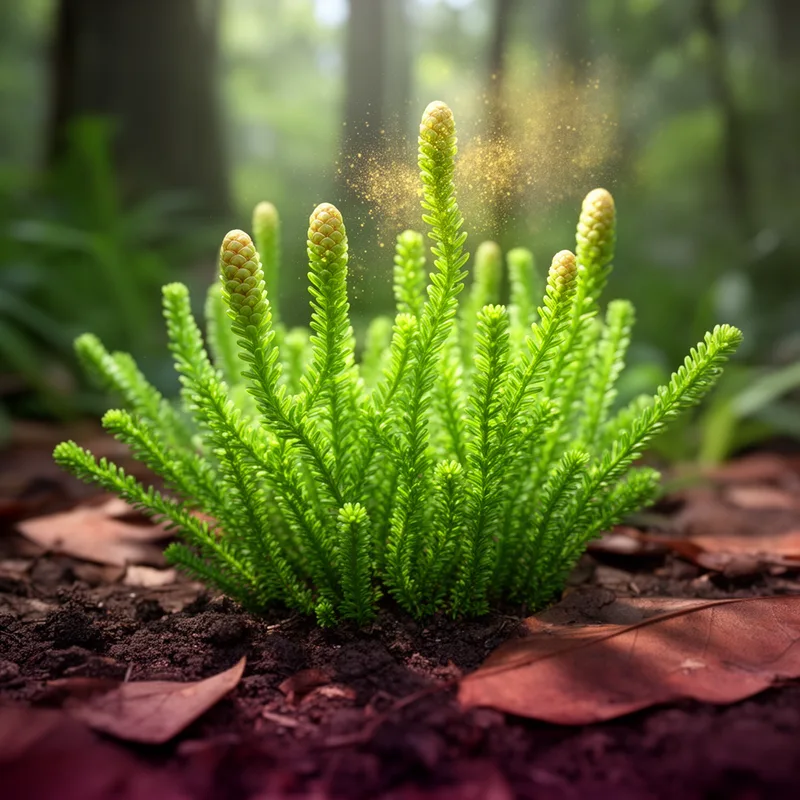
Selaginellales
- noun
- /səˌlædʒɪˈnɛlˌleɪz/
- Specialized
- Selaginellales are distinguished by their unique leaf and spore structures among vascular plants.
Examples
-
In some botanical classifications, Selaginellales are grouped within Lycopodiales due to shared characteristics.
-
The Selaginellales order consists of various spore-producing plants.
-
Botanists have studied the evolutionary history of the Selaginellales to better understand plant diversification.
-
Many botanists study Selaginellales for their unique adaptations.
-
Selaginellales are an important group of spore-producing vascular plants found in many ecosystems.
-
Researchers classify Selaginellales based on their distinct reproductive structures and leaf morphology.
-
Various species within the Selaginellales exhibit adaptations that allow them to thrive in moist environments.
Surface Forms
Morphology
Selaginellales = Selaginella (semi-transparent) = Selaginella + ales
The relation to the genus name 'Selaginella' is clear, but the taxonomic suffix '-ales' meaning 'order' is specialized and not obvious to average learners.
Etymology
Selaginellales is a scientific name built from the plant genus Selaginella and the ending -ales, which in biology marks a 'group' or 'order' of related plants. So Selaginellales simply means the order of plants that are like Selaginella.

