

Scorpaena grandicornis
- noun
- Specialized
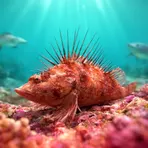
- The Scorpaena grandicornis is known for its venomous spines, which can cause painful stings.
Examples
-
Researchers observed the behavior of Scorpaena grandicornis in its natural coral reef habitat.
-
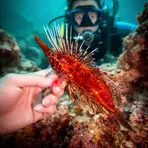
Divers are often warned to avoid contact with Scorpaena grandicornis due to its excellent camouflage and sharp spines.
-
The Scorpaena grandicornis is often found in coral reefs.
-
Many divers are cautious around the Scorpaena grandicornis due to its venomous spines.
-
Many divers are cautious around Scorpaena grandicornis due to its venomous spines.
-
Divers are often warned to avoid contact with Scorpaena grandicornis due to its excellent camouflage and sharp spines.
-
The Scorpaena grandicornis is known for its venomous spines, which can cause painful stings.
Synonyms
 1
9.1
1
9.1

A fish with a pointed body and venomous spines that lives in warm seas

 1
7.9
1
7.9
A sea fish with a pointed body and spines that give a painful sting

A group of sea fish like scorpionfish that live in warm waters and can sting

A group of scorpionfish species in the scorpionfish family
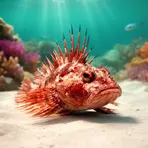
A sea fish that lives on the bottom, often in warm waters, and has venomous spines
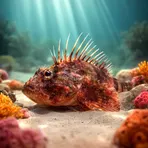
A sea fish that lives on the sea bottom in warm water and has spines that can sting
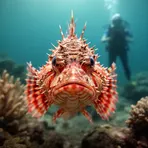
A sea fish with a head covered by hard bony plates and sharp spines
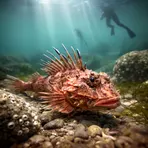
A fish that lives near the coast with a narrow body, armored head, and venomous spines
Surface Forms
Morphology
Scorpaena + grandicornis
This is a binomial Latin scientific name rather than a normal English phrase; knowing the genus label 'Scorpaena' and an undocumented Latin-looking element 'grandicornis' does not allow a B1 learner to infer the meaning 'a venomous scorpionfish species' without taxonomic or Latin-root knowledge. Scientific names are language- and domain-specific and do not follow everyday compositional patterns, so the expression is not transparently understandable to typical learners.
Etymology
Scorpaena grandicornis gets its name from old words: Scorpaena comes from a word for 'scorpion' because the fish has sharp, stinging spines, and grandicornis means 'large horn' because it has big horn-like spines. So the name helps you remember that this sea fish is a scorpionfish with venomous, horn-like spines.