

Scindapsus aureus
- noun
- /ˈsɪndæp.təs ˈɔːr.i.əs/
- Specialized
- The variegated leaves of Scindapsus aureus make it a popular choice among houseplant enthusiasts.
Examples
-
Many offices decorate with Scindapsus aureus because it thrives in low light conditions.
-
He watered his Scindapsus aureus every week to keep its foliage lush and healthy.
-
Scindapsus aureus is beautiful.
-
My favorite plant is Scindapsus aureus.
-
He watered his Scindapsus aureus every week to keep its foliage lush and healthy.
-
Many offices decorate with Scindapsus aureus because it thrives in low light conditions.
-
The variegated leaves of Scindapsus aureus make it a popular choice among houseplant enthusiasts.
Synonyms


 1
8.2
1
8.2
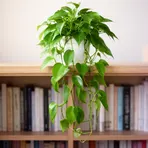
A common houseplant with heart shaped leaves that trails down
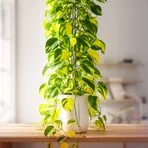
A climbing houseplant with green and yellow leaves

An evergreen climbing plant with green leaves streaked with yellow
Surface Forms
Morphology
This Latin binomial is fully compositional: 'Scindapsus' denotes a genus of climbing plants and 'aureus' means golden, so the phrase transparently refers to a Scindapsus with golden/variegated coloring. Taxonomic name formation is regular and cross-linguistically interpretable, so a B1 learner who knows both constituent meanings can infer the basic sense (a golden pothos-type plant).
Etymology
Scindapsus aureus is a name that describes the plant: aureus means 'gold', because its leaves often have golden patches, and Scindapsus comes from an old word for a climbing plant, showing how it climbs or hangs on stems. That's why the name fits this common houseplant often called 'pothos' or 'devil's ivy'.