
Satyagraha
 1
9.9

- noun
- /ˌsɑːtiˈɡrɑːhə/
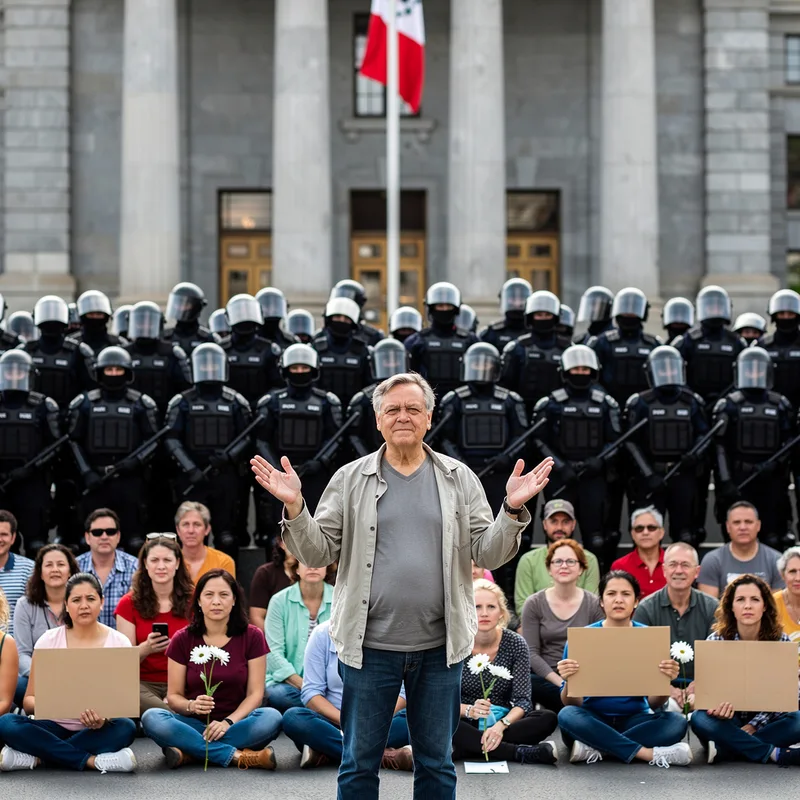
- During the freedom struggle, Satyagraha became a powerful tool for Indians to peacefully oppose British rule.
Examples
-
Gandhi promised to end the satyagraha if the act was repealed and the prisoners were released.
Blog text (29) -
Gandhi was responsible for getting the British to allow India to form its own government through his technique of satyagraha, or non-violence.
Blog text (9) -
I think there is no other way than Satyagraha.
-
But the whole purpose of this Satyagraha was to drink water from the tank.
-
Satyagraha, meaning "love force" or "truth force," should be your word of power.
Blog text (25) -
I think we should get into Gandhi's concept of Satyagraha.
-
Satyagraha loses power, if there is no discipline.
-
It has been resolved that December 25th and 26th, 1927 will be the dates for the Satyagraha at Mahad.
-
Mahatma Gandhi's philosophy of Satyagraha inspired many leaders around the world to adopt nonviolent resistance.
-
The principles of Satyagraha emphasize truth and nonviolence in the pursuit of justice.
How Nonviolent
1
9.9
 2
3.9
32
5.6
664
2.5
74
4.6
Surface Forms
Etymology
Satyagraha comes from the Sanskrit parts satya meaning 'truth' and agraha meaning 'firmness' or 'holding fast'. Gandhi used it as a kind of 'truth-force', resisting without violence by holding firmly to what is right, so Satyagraha today means nonviolent resistance.