

Sarraceniaceae
- noun
- /ˌsærəˈsiːniˌeɪsiː/
- Specialized
- Botanists have identified several genera within the Sarraceniaceae across North and South America.
Examples
-
The Sarraceniaceae are famous for their unique pitcher-shaped leaves adapted to trap insects.
-
The Sarraceniaceae family includes several species of pitcher plants.
-
Many members of the Sarraceniaceae display vividly colored pitchers to attract their prey.
-
Are Sarraceniaceae plants found only in North America?
-
Many North Americans are familiar with the family Sarraceniaceae, which includes pitcher plants that trap insects for nutrition.
-
In botanical gardens, you can observe the captivating Sarraceniaceae, known for their tubular leaves that attract a variety of insects.
-
Researchers explore the intriguing features of the Sarraceniaceae, as these insect-eating plants play a significant role in their natural habitats.
Synonyms
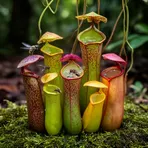
A group of insect-eating plants with cup-shaped leaves that trap insects
Surface Forms
Morphology
Sarraceniaceae = Sarracenia (opaque) = sarraceni + aceae
The suffix '-aceae' is a technical botanical family-forming suffix unfamiliar to average B1 learners, so the meaning 'family of' is not deducible from the base.
Etymology
Sarraceniaceae comes from the plant name Sarracenia, named for the French doctor Sarrazin, and the ending -aceae that marks a plant 'family'. So, Sarraceniaceae is the Sarracenia 'family', the group of pitcher plants named after Sarrazin.

